I have never trained as a designer. I couldn’t tell you the technical name for the composition rule that makes an image feel balanced, or the exact reason one shade of blue calms a room while another feels cold. What I have always had is a clear picture in my head of a mood, a scene, a feeling I wanted a piece of my work to carry. For most of my working life, the gap between that picture in my head and an actual image sitting in front of me could only be closed by someone else’s hands.
Higgsfield houses an AI Image Generator that changed that gap for me, not by replacing the picture in my head, but by finally giving it somewhere to land. It’s one of several tools sitting inside the same platform, alongside video and voice generation, editing, and upscaling, all in one place rather than scattered across separate apps I’d need to learn one at a time. Finding it properly has changed how I think about what “being creative” actually requires, and honestly, it’s changed how I answer the question when someone asks whether I made something myself.
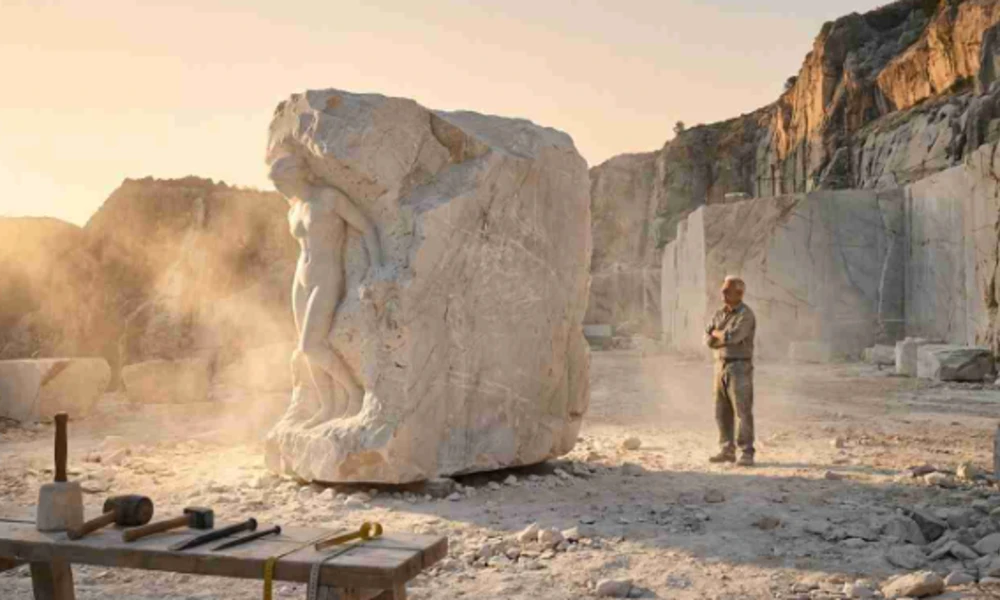
The idea was always mine
I want to be honest about what changed and what didn’t. My taste didn’t change. My eye for what feels off in a composition didn’t change. The years I’ve spent noticing how light falls in a room I love, or why one photograph stops me scrolling and a hundred others don’t, none of that came from a tool.
What changed is that the distance between noticing something and being able to show it shrank to almost nothing. I used to carry ideas around for months, sometimes years, waiting for the right designer, the right budget, the right moment to finally make something real. Now I can sit with an idea in the morning and have a version of it in front of me by lunch, thanks to a tool I keep open in the same browser tab as everything else I use to run my work.
That’s not a small shift. It’s the difference between an idea staying a private thought and an idea becoming something you can actually respond to, refine, and eventually share. There’s something almost disorienting about how quickly that gap closed, after years of the opposite being true.
Where the human part still has to show up
I’ve read enough about AI to know the easy trap here. It would be simple to describe this as AI doing the creative work and me just typing a sentence. That’s not honestly what happens, at least not for anything I’d actually put my name to.
The generic version of a prompt gets a generic image back. A vague description of “a peaceful morning scene” produces something that could belong to anyone, which is exactly the problem. What actually shapes a result I’m willing to use is everything underneath the prompt, the specific memory of a particular light at a particular hour, the reason a certain texture matters to the story I’m trying to tell, the small detail that makes something feel like mine rather than like a template.
Higgsfield doesn’t do that part. I do. What it does is remove the technical bottleneck that used to sit between having that specific vision and actually seeing it, the years of software I would have had to learn, or the design skill I would have needed to hire someone else to provide instead. That bottleneck is gone now, but the vision it was blocking still has to come from somewhere, and it’s never come from the tool itself, however much of my week Higgsfield now quietly takes up.
Learning to work with more than one instrument
One thing that surprised me was how differently various AI models interpret the same idea. A description that comes back photorealistic and grounded from one model comes back softer, almost painterly, from another. Neither is wrong; they’re just different instruments, and which one serves a particular idea depends entirely on what that idea needs.
On Higgsfield, this is built into how the workspace is set up. Access to more than a dozen of these models sits in one place, including Nano Banana Pro, GPT Image, Seedream, and FLUX, which has quietly changed how I approach a new idea. I didn’t expect a platform to change my process this much, but Higgsfield has genuinely become part of how I think through a concept now, not just how I execute one.
That flexibility matters more than it sounds. A brand story that needs warmth and softness shouldn’t be forced through a model built for sharp, commercial precision, and having the option to match the tool to the idea, rather than the idea to whatever tool I happen to have open, has made the results feel less generic, not more. It’s a small thing, being able to try the same idea two or three different ways within minutes, but it’s changed how often I trust my first instinct enough to actually finish something.
The part that still takes real thought
There’s a version of this that would be dishonest if I skipped it. Just because generating an image takes minutes now doesn’t mean every generated image is worth using. Most of my early attempts at anything were flat, forgettable, obviously the first thing that came back rather than something considered.
The images I’ve actually used, the ones that felt like they belonged to something real, came after refining, rejecting, adjusting, and sometimes starting over with a completely different description because the first one wasn’t honest about what I was actually trying to say. Higgsfield’s editing tools let me go back into a specific part of an image and adjust just that element, a color, a detail, a piece of the composition, without losing everything else that was already working. That matters because the difference between a first draft and something worth publishing is almost always in those small, deliberate adjustments, not in the initial generation itself.
I’ve come to think of the first result I get from any prompt as closer to a sketch than a finished piece. It tells me whether the idea has legs, whether the direction is worth pursuing, but the actual work still happens in the rounds of adjustment that follow, going back into the image, changing one thing, comparing it against what I was actually picturing, and repeating that until it finally matches.
What this actually frees up
Here’s what I think gets missed in a lot of conversations about AI and creativity. The time this saves isn’t really about producing more content faster, though it certainly does that. It’s about what becomes possible when the technical barrier between an idea and its execution stops being the limiting factor.
I used to make decisions about which ideas were “worth” pursuing partly based on how expensive or difficult they’d be to actually produce. A visual idea that would have required booking a shoot, briefing a designer, and waiting weeks often just didn’t happen, not because it wasn’t good, but because the cost of finding out wasn’t worth it for something that might not even work.
Now I can find out in an afternoon, using the same workspace I already have open for half a dozen other things. That’s changed which ideas I let myself take seriously, and I suspect that’s true for a lot of people building something on their own, without a design team sitting down the hall. Higgsfield has become, almost without my noticing it happen, the place I go to test whether an idea is actually worth the rest of the effort it would take to build.
Where I still draw a line
I don’t use AI-generated images for everything, and I don’t think that instinct is wrong. There are moments- a genuinely personal photograph, a memory that matters specifically because it’s real- where a generated image would feel like a lie even if nobody else could tell the difference. I know the difference, and that’s enough for me to keep those moments as they actually happened.
What I use Higgsfield for is different from that: the visuals that support a story rather than pretend to be one, which is a distinction Higgsfield’s editing tools have made easier to hold onto than I expected. A mood board for a new project. A concept image that helps someone else understand what I’m picturing before we build it for real. A piece of visual language for an idea that’s still taking shape. In every one of those cases, the honesty isn’t in the image being unedited or untouched by a tool. It’s in the image actually representing something I meant, which is a line I’ve had to think about more carefully than I expected to when I first started using it.
What I’d tell someone starting where I started
If you’re someone who has always had ideas but never the technical means to make them visible, I’d say start smaller than you think you need to. My first attempts weren’t the mood boards or concept pieces I use Higgsfield for now; they were throwaway experiments, testing whether a feeling I had in my head could exist as an actual image at all.
That low-stakes starting point matters. There’s a temptation, once you realise how fast this can move, to immediately try to produce something polished and finished. I’d resist that. The value of Higgsfield’s speed isn’t really in the finished piece; it’s in how many rough, imperfect attempts you can afford to make before you find the one that’s actually honest. Give yourself that runway before you judge whether any of this is for you, and don’t be surprised if the third or fourth attempt on Higgsfield teaches you more about what you actually wanted than the first one ever could.
I’d also say pay attention to what still bothers you about the results. If a generated image technically does what you asked but still feels wrong, that discomfort is worth listening to. It usually means the description didn’t carry enough of the specific thing you actually meant, and that gap between what you asked for and what you meant is where the real creative work still lives, no matter how good the tool gets.
The instrument, not the idea
I keep coming back to a line I read recently in a piece here about using AI without losing the human story: that AI is a mirror reflecting the knowledge, experience, and imagination of the person using it, and that the quality of what comes back depends on what’s placed in front of it. That’s exactly how I’ve come to think about AI image generation too. It said something I’d been feeling but hadn’t quite put into words yet: that the tool was never going to be the interesting part of this story. What I brought to it was.
An AI Image Generator didn’t hand me an eye for composition I didn’t already have. It didn’t teach me why a particular kind of quiet, space feels emotionally honest to me in a way a busy, crowded one doesn’t. Those things came from years of paying attention to what actually moves me, long before any tool could turn that attention into something visible.
What Higgsfield gave me was an instrument, not a shortcut around having to bring something to it in the first place. A genuinely versatile one, capable of photorealism or something closer to painting depending on what I ask of it, fast enough that an idea doesn’t have to wait months to find out if it was worth having, and precise enough, through editing tools that let me adjust one detail at a time, that the final result can actually feel considered rather than accidental.
I still bring the idea. I still decide what’s honest and what isn’t, what belongs to the story and what’s just noise dressed up to look impressive. The tool never does that part, and I don’t think it’s supposed to. Whatever platform sits behind that instrument, for me right now that happens to be Higgsfield, matters far less than the discipline of still deciding myself, every single time.
What’s changed is simply this: the ideas I used to carry around for years, waiting for the right circumstances to finally exist, don’t have to wait anymore. They can exist the same week I have them. And for anyone who has ever sat on a good idea because making it real felt too far out of reach, that shift is worth taking seriously, not because the technology is clever, but because of what it quietly gives back: the time and the permission to actually try.
- About the Author
- Latest Posts

Our Editorial Team are writers and experts in their field. Their views and opinions may not always be the views of Wellbeing Magazine. If you are under the direction of medical supervision please speak to your doctor or therapist before following the advice and recommendations in these articles.