Why Pelvic Health Still Goes Unspoken
For many women, pelvic health is something they are only invited to think about when something has already gone wrong. It may be after childbirth, during menopause, following surgery, or at the point where bladder leaks, hip pain, prolapse symptoms or painful intimacy begin to interfere with everyday life. Even then, the subject is often wrapped in embarrassment, silence or resignation, as though discomfort is simply part of being female.
Sandra Whittle, founder of Soma Therapies, believes it is time to change that conversation.
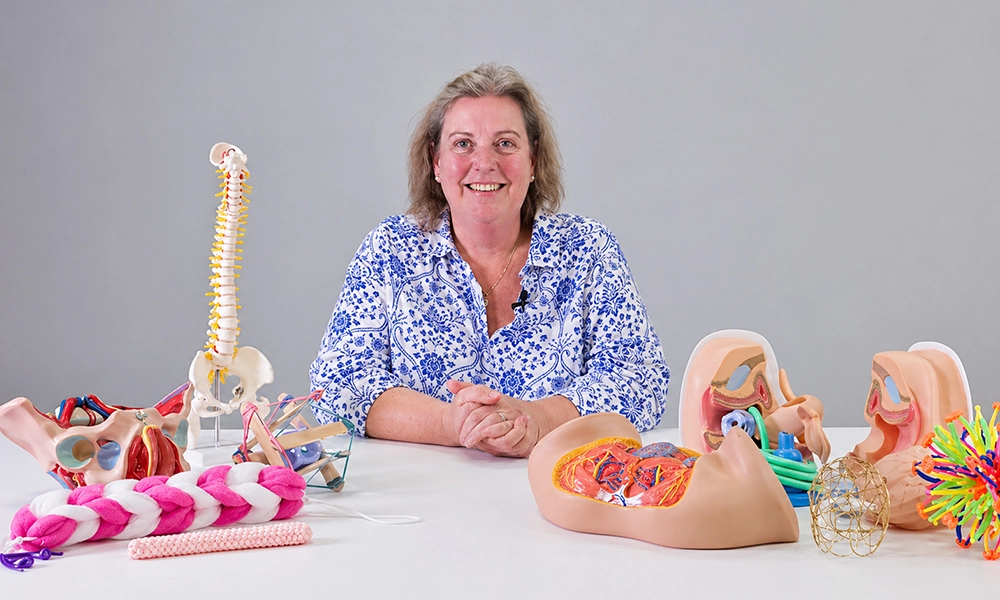
Sandra Whittle and the Soma Therapies Philosophy
A chartered physiotherapist with a specialist interest in women’s health, Sandra has spent decades working with the body, not only as a clinical practitioner, but as an inventor, educator and passionate advocate for self-care. Her work now centres on helping women better understand their own bodies, particularly the pelvic floor, fascia, scar tissue and the often-overlooked connection between internal tension, hip pain, back pain and postnatal recovery.
Her journey began not in a boardroom, but in the exhausted reality of clinical practice and single motherhood. At the time, Sandra was running her own physiotherapy clinic while raising three children. Once a month, she gave what she calls “the most precious thing we have” — time — to people with learning disabilities, offering massage and therapeutic touch.
The Moment That Sparked Innovation
After one of those long days, she returned to her clinic to discover that 26 patients had been booked in for the following day, with barely a break between appointments. That night, after putting her children to bed, her hands and legs ached from standing, massaging and physically giving so much of herself. She wondered how she could possibly continue treating others if her own body was breaking down in the process.
Like many women, she was caring for everyone else first and trying to find her own solution last.
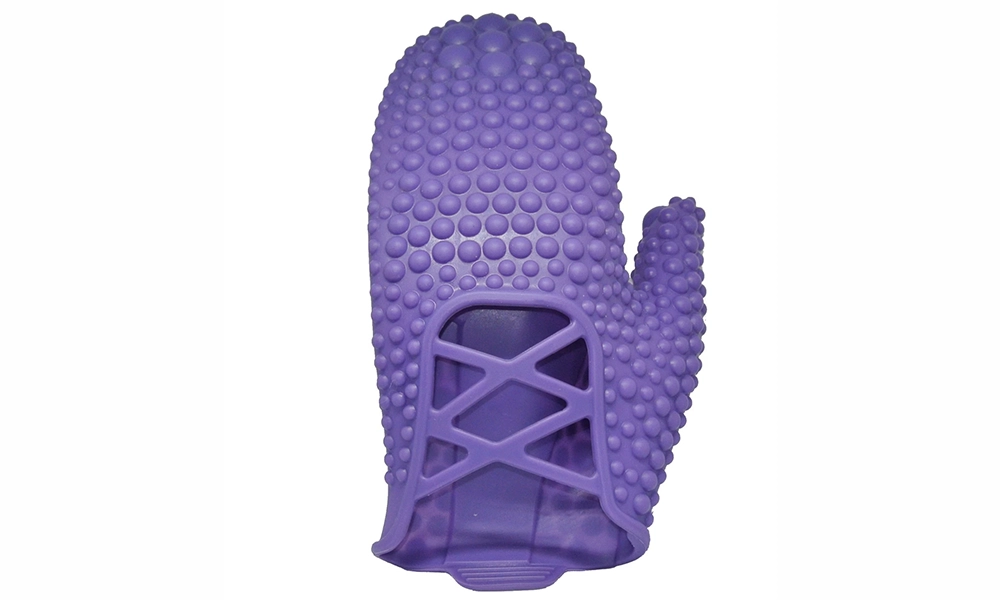
The first Soma Therapies massage mitt was born out of that moment of necessity. Sandra imagined a tool that could mimic the therapeutic pressure of the hand, but reduce the strain on her own body. Her father made her a plaster-of-Paris model of a hand, and in the quiet of the evening, once the children were asleep, Sandra began experimenting with small nodules using an apple corer and a straw. Larger nodules could support deeper sports massage, smaller ones could work into more delicate areas, while a thumb-like shape could help with pressure points.
From Idea to Impact
At first, like many female inventors before her, Sandra simply “parked” the idea. She was busy, stretched and unsure where to take it. Then one day, a client with an equestrian background mentioned that she had massaged her horse using silicone oven gloves. Sandra showed her the model. The response was instant: it would be brilliant.
That small exchange became a turning point. Sandra began exploring how the mitts could support self-massage, scar tissue, musculoskeletal pain and everyday tension. She trialled them with hundreds of patients, listening carefully to the feedback. People reported that they could use the tools to help themselves, to ease tension, to support movement and to become more engaged in their own care.
Soma Therapies now describes its mission as helping people take more responsibility for their health and wellbeing through simple self-massage techniques.
Restoring Dignity Through Self-Care
One of the most moving moments came when Sandra gave a pair of facial massage mitts to a woman who had experienced head and throat cancer. The woman had lived for years with changes to her face and lips. Sandra encouraged her to take the mitts home for the weekend and gently massage. When she returned, she was wearing lipstick. She cried, handed Sandra flowers, and told her that for the first time in years, she felt she had been given part of her life back.
For Sandra, this was never simply about products. It was about dignity, agency and helping people reconnect with their own bodies. Soma Therapies reflects that philosophy, offering services and education around pelvic health physiotherapy, scar tissue massage, oncology massage, pregnancy massage, acupuncture and other therapeutic approaches.
Understanding the Pelvic Floor Connection
Over time, Sandra’s clinical focus moved increasingly towards women’s health, and particularly the pelvic floor. She began asking questions that many women are never encouraged to ask. What if some hip and back pain is not simply coming from the outside of the body, but from internal pelvic floor tension? What if scar tissue after childbirth is having an effect years, even decades, later? What if we have been taught to squeeze and strengthen the pelvic floor without first understanding whether it is tense, restricted, painful, under-responsive or carrying trauma?
As a physiotherapist, Sandra had been trained to think about muscles, joints, posture and movement. Yet her own experience shifted her perspective. She began experiencing severe hip pain and believed she might be heading towards a hip replacement. Instead, by exploring internal pelvic floor release and working with the obturator internus, a deep muscle connected to the hip and pelvis, she found relief. It changed how she viewed the body.
Moving Beyond “Kegels”
For many women, the pelvic floor is still reduced to the word “Kegels”. We are told to squeeze, strengthen and carry on. Sandra’s work invites a more nuanced approach. The pelvic floor is not an isolated hammock of muscle. It is part of a complex, responsive system connected to breath, posture, fascia, scar tissue, hips, back, bladder, bowel, sexual function and emotional safety.
It changes through pregnancy, birth, menopause, trauma, ageing, exercise and stress.
The Postnatal Care Gap
Sandra is particularly passionate about the way women are cared for after childbirth. Too often, she says, women are told that everything “looks fine” without being given meaningful information about tearing, episiotomy scars, internal healing or long-term recovery. Many women do not know where their scar tissue is, how it may be affecting movement, or why discomfort, bladder symptoms or pelvic heaviness may emerge later in life.
This lack of education is not a small oversight. It is part of a wider cultural silence around women’s bodies.
A More Empowered Model of Care
Sandra believes women need better information, better assessment and a more compassionate model of care that involves them in understanding their own anatomy. In her own clinical work, she encourages women to participate actively in assessment, noticing where tissue feels tender, restricted or different. It is not about doing something to the body, but helping a woman come back into relationship with her body.
Innovation in Pelvic Health Tools
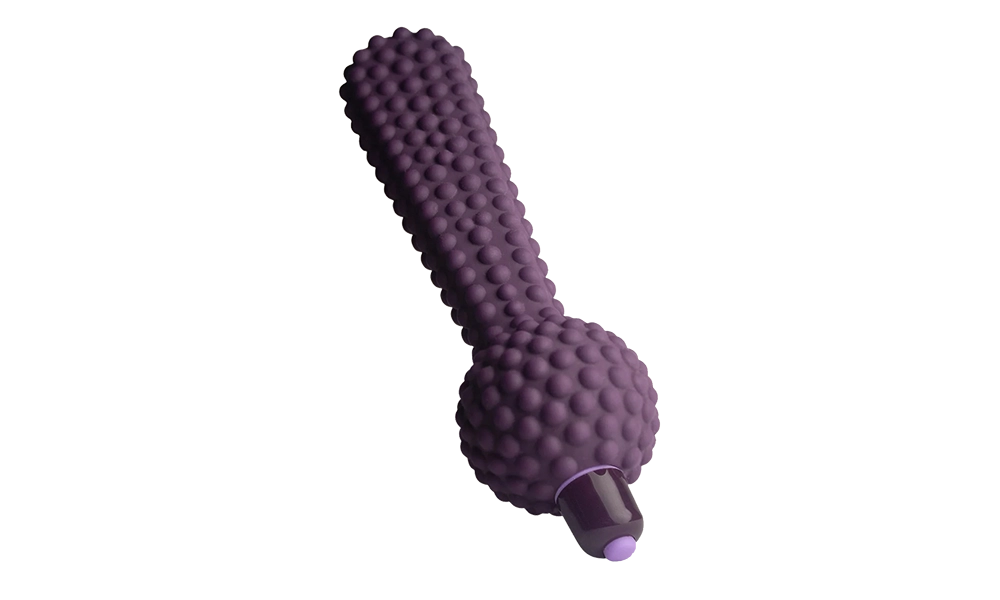
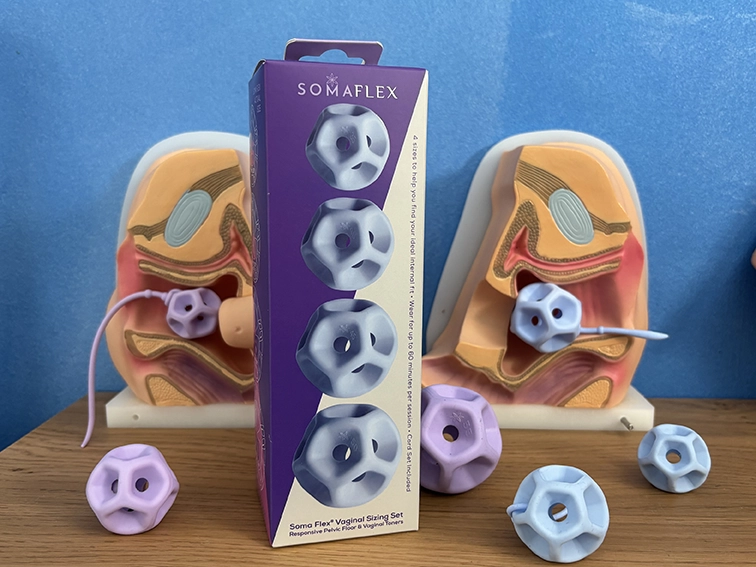
Her later inventions have grown from this same philosophy. MyKORI, described as a pelvic floor resistance trainer and massage tool, was designed by Sandra as a way to help women take more control of pelvic floor health, with the aim of improving awareness, conditioning and internal tissue responsiveness. More recently, Soma Flex has emerged from her interest in creating a softer, more responsive form of pelvic support that works with the body rather than simply pushing tissues into place.
Changing the Conversation Around Women’s Bodies
Sandra talks about the vagina and pelvic floor with refreshing openness. She wants women to have choice. She wants them to understand that pelvic health is not shameful, niche or only relevant after childbirth. It is central to how women move, age, exercise, recover, have sex, laugh, cough, sneeze, dance and live.
Her design thinking is deeply inspired by nature. She speaks about connective tissue, fascia, biotensegrity and the way the body responds as a living, moving system rather than a mechanical structure of pulleys and levers. She compares healthy tissue to something fluid and responsive, almost like an octopus, adapting, wrapping and moving with the body.
Persistence and Purpose
What makes Sandra’s story especially powerful is that it is also a story of persistence. She has faced the familiar obstacles so many women encounter when trying to bring an intimate health innovation into the world: lack of funding, lack of understanding, male-dominated business support spaces, the discomfort around discussing vaginal health, and the emotional labour of being both a practitioner and a pioneer.
As a single mother, she asked her children whether they should stop pursuing the patents and inventions in order to have a bigger Christmas. Their answer was no. One Christmas was enough, they told her. Time together mattered more. They made gifts, played games and became part of the quiet support system that helped her keep going.
A Mission to Transform Women’s Health
Today, Sandra’s mission is bold. She wants to change the lives of at least 15 million women. It is an ambitious number, but behind it is a simple desire: to plant a seed of awareness.
Perhaps a woman will read about pelvic scar tissue and finally wonder whether her hip pain might have a deeper story. Perhaps another will seek a women’s health physiotherapist after years of bladder symptoms. Perhaps someone in menopause will stop blaming herself and start asking better questions. Perhaps a new mother will realise she deserves proper recovery care, not just a six-week check and silence.
A New Era of Female Self-Care
This is where Sandra’s work becomes bigger than one product or one clinic. It is part of a much-needed shift in women’s health, from embarrassment to education, from passive treatment to self-knowledge, from “put up with it” to “let’s understand what is really happening”.
For Wellbeing Magazine readers, Sandra’s message is both practical and empowering. Pelvic health is whole-body health. Hip pain, back pain, bladder leaks, prolapse symptoms, painful sex, postnatal scar tissue and menopausal changes are not subjects to hide from. They are invitations to listen more closely to the body and to seek specialist support where needed.
As Sandra puts it, women know their own bodies better than anyone else, but many have never been given the language, tools or permission to understand them. Her work is about giving that back.
And perhaps that is the true heart of Soma Therapies: not simply massage mitts, pelvic tools or physiotherapy, but a revolution in female self-care. A reminder that women’s bodies are not design faults. They are intelligent, adaptive, extraordinary systems that deserve curiosity, respect and care at every stage of life.
DISCOVER: somatherapies.co.uk
- About the Author
- Latest Posts

Rachel Branson is the Founder of Haywood Media and Editor-in-Chief of Wellbeing Magazine, where she has spent more than twenty years exploring the relationship between health, wellbeing and the environments in which we live. Her passion for housing began growing up in her family’s estate agency, where her grandfather, father and uncles worked as a Chartered Surveyor specialising in commercial, residential property and new homes. She later became Head of Communications for a social housing provider, working closely with communities and new developments. Bringing together experience across property, housing, communications and wellbeing, Rachel is developing a new body of work focused on how homes and neighbourhoods can be designed to support healthier, happier lives through every stage of life.