Deciding to get vision correction surgery is one thing. Finding the right doctor to perform it is another conversation entirely. Los Angeles has no shortage of providers, and the range in experience, technology, and approach between them is significant.
This is not a decision that should come down to whoever is running a promotion or has the most visible advertising. Your eyes are not a place to cut corners, and the doctor you choose directly determines the quality and safety of your outcome.
Here is what actually matters when you are doing this research.
1. Credentials and Experience Should Be Your First Filter
Not all eye surgeons have the same depth of training, and in a field that involves lasers and surgical instruments operating on one of the body’s most delicate structures, that difference matters enormously. The baseline you are looking for is board certification in ophthalmology, ideally with a subspecialty focus in refractive surgery. Beyond certification, look at how long the surgeon has been performing the specific procedure you are considering and how many procedures they have completed.
Volume matters in surgical outcomes. A surgeon who has performed thousands of a particular procedure has encountered the edge cases, refined their technique, and built the kind of judgment that only comes from experience. More than 500 eye doctors or their family members have chosen the Maloney-Shamie-Hura Vision Institute to perform their own vision correction surgery, which is a meaningful signal. When the people who understand the field best make a personal choice, it tells you something real about where the trust in the profession actually sits.
Ask specifically about outcomes data. Good surgeons track their results and are willing to share them.
2. The Evaluation Process Tells You Everything About the Practice
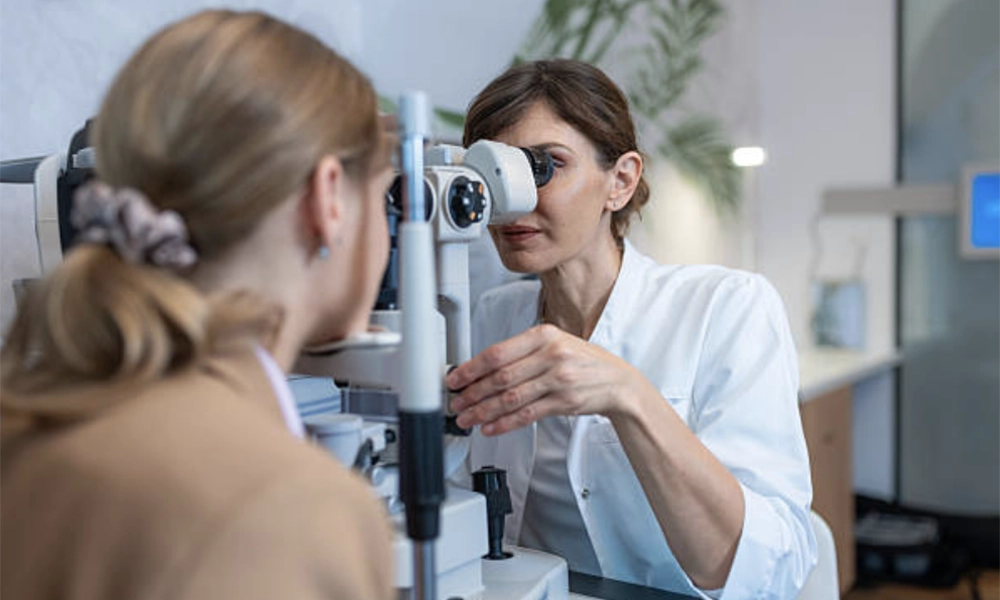
The pre-surgical evaluation is one of the most reliable indicators of the quality of care you will receive throughout the entire process. Vision correction is not a one-size-fits-all procedure. Your corneal thickness, prescription, pupil size, tear film quality, and overall ocular health all factor into which procedure is appropriate for you and what outcome is realistically achievable.
This is precisely why, when looking for an eye doctor Los Angeles for vision correction, the depth and rigor of that first evaluation appointment matters as much as the surgeon’s credentials. Surgical centers such as Maloney-Shamie-Hura Vision Institute tend to conduct detailed multi-step evaluations before making any procedure recommendation, triple-checking surgical measurements and using advanced mapping technology to build a treatment plan specific to each patient’s visual system.
A practice that rushes this process or pushes a specific procedure before fully evaluating your eyes is not one that’s prioritizing your outcome.
3. Technology Matters, But So Does How It Is Used
Modern vision correction has advanced significantly. All-laser LASIK eliminates the manual blade used in older techniques. Wavefront-guided and topography-guided platforms create highly individualized treatment maps rather than applying a standard correction. EVO ICL offers an implantable lens option for patients who are not ideal LASIK candidates. These are meaningful distinctions, and the technology a practice has access to affects what is possible for your particular prescription and corneal profile.
The newest generation of laser vision correction, WaveLight Plus, which uses SightMap ray-tracing technology to analyze how light travels through the entire eye, has been shown to offer excellent safety, efficacy, and predictability for the correction of myopia and compound myopic astigmatism. The Maloney-Shamie-Hura Vision Institute was the first center in Los Angeles to offer WaveLight Plus for vision correction.
That said, technology alone is not the deciding factor. The surgeon’s ability to interpret the data, make sound clinical judgments, and execute the procedure accurately is what converts advanced equipment into good outcomes. The two need to exist together.
4. Communication and Transparency Are Non-Negotiable
A surgeon who is genuinely focused on your outcome will tell you when you are not a good candidate for a particular procedure. They will explain the risks alongside the benefits. They will set expectations that are grounded in your actual measurements rather than the best-case scenario. That kind of honest communication is a quality marker, not a reason for concern.
Pay attention to how your questions are handled during the consultation. Are they answered directly and completely? Does the surgeon take time to explain the reasoning behind their recommendation? Do you feel like you understand what you are agreeing to?
According to a 2026 systematic review examining patient satisfaction after refractive surgery, unmet expectations were among the most significant drivers of dissatisfaction, even when the surgical outcome was technically successful. That finding underscores how much the pre-surgical conversation matters. A doctor who communicates well is not just pleasant to work with. They are producing better outcomes by ensuring you go into surgery with an accurate picture of what is ahead.
The Bottom Line
Vision correction surgery has an excellent safety and efficacy profile when performed by a qualified surgeon using appropriate technology on a well-evaluated candidate. The process of finding the right doctor is essentially the process of verifying those three conditions are met. Credentials, a thorough evaluation, appropriate technology, and honest communication are not optional features of a good practice. They are the baseline you should expect before you agree to anything.
- About the Author
- Latest Posts

Our Editorial Team are writers and experts in their field. Their views and opinions may not always be the views of Wellbeing Magazine. If you are under the direction of medical supervision please speak to your doctor or therapist before following the advice and recommendations in these articles.