Custom Infrared Saunas: Why Bench Proximity Beats Ornate Cedar Aesthetics
Building a custom infrared sauna often begins when you outgrow standard premium kits and want a space engineered exactly for your body and your home.
Building a custom infrared sauna often begins when you outgrow standard premium kits and want a space engineered exactly for your body and your home. But the transition from a functional, mass-market box to a bespoke architectural feature comes with a trap: getting lost in the aesthetics of the wood while ignoring the physiological mechanics of the heat. First, identify if your goal is targeted vasodilation via infrared saunas—like those built by SaunaCloud—or systemic sweat production via a traditional stove.
Key Takeaways
- The frequently cited 40% reduction in all-cause mortality is linked directly to traditional Finnish dry saunas, not infrared panels.
- Infrared systems operate under a 60°C thermal cap for direct tissue heating, contrasting with a traditional stove's 90°C ambient air threshold.
- A 30-day experiment using cooling protocols for heat exposure to protect fertility markers during high-heat sauna exposure demonstrated the active physiological management daily usage requires.
The Efficacy Gap: Sorting Finnish Mortality Data From Thermal Mechanics
You cannot engineer an infrared sauna without understanding how 60°C radiation affects cardiovascular health and electrolyte levels.

Ambient Heat Vs. Tissue Heat
Local tissue heating and ambient convective heating are two different experiences. Research into thermal operational differences demonstrates that an infrared system warms your skin and muscles directly with light, which is why technical guidelines enforce a strict 60°C thermal cap as an external clinical boundary. If you install a traditional stove, the goal is hitting 90°C to trigger a sweat response through hot air and humidity.
Don't expect 60°C infrared to feel like a 90°C traditional room; it's designed for direct tissue therapy. Understanding these technical boundaries helps you design a space that meets your needs.
Deconstructing the Mortality Data
The famous 40% mortality reduction linked to frequent heat exposure comes almost entirely from Finnish studies on traditional dry saunas, not infrared technology. The clinical data shows a 40% reduction for those using saunas four or more times a week, and a 16% reduction for a frequency of four to seven sessions compared to occasional use. While infrared saunas induce similar cardiovascular vasodilation—the widening of your vascular network that helps lower systolic blood pressure—and relieve pain safely at lower temperatures, the burden of long-term longitudinal proof for prolonged cardiovascular health still rests with traditional Finnish mechanics.
The burden of long-term longitudinal proof for prolonged cardiovascular health still rests with the traditional Finnish mechanics behind routine sauna use.
The Hybrid Protocol: Sequencing Infrared Into Traditional Stoves
You don't have to choose a side in the thermal debate.
A hybrid sauna design (Infrared and Traditional Finnish stove) offers the best of both worlds within a single home enclosure. By integrating these systems, you combine the deep-tissue benefits of infrared light with the high-heat, convective experience of a traditional rock stove.

The Dual-Mode Build
The ultimate move for home wellness is integrating a hybrid unit that allows both infrared and traditional Finnish stove use. You can embed full-spectrum ceramic heating panels alongside a central rock stove, effectively giving you two distinct sauna experiences in one room. This flexible design allows you to store away your Traditional Sauna Supplies—like a birch sauna broom or eucalyptus oil—for the high-heat steam days, while keeping the infrared components dry and ready for targeted muscular therapy.
Operational Sequencing
A hybrid room requires a little management; don't just flip every switch at once. To avoid blowing a circuit, start in infrared mode for quick relief, then turn the panels off. Use the residual heat to help the traditional stove warm up, then let the convective heat take over.
Engineering Ergonomics: Why Heater Proximity Beats Ornate Aesthetics
For daily infrared use, core ergonomics matter more than wood finish.
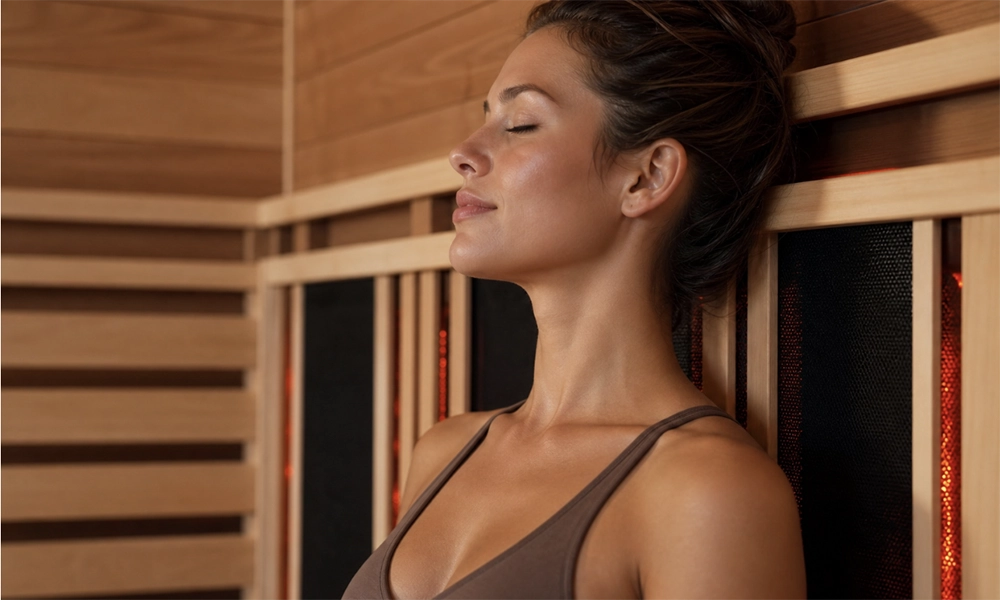
To maximize vasodilation, muscle relief, and physiological benefits like testosterone increases from saunas when using your Infrared Heating Panels, you must position benches within 5–10 cm of the heater elements. Experienced users, including those who have tested high-end prefabricated models like SaunaCloud, realize that to get relief, they shift to sitting directly against the black carbon panels for targeted back relief. Design your benches so you can sit flush against the panels, and skip the angled backrests that keep you too far from the emitters.
Installing adjustable ventilation and dimmable lighting is required to expel carbon dioxide and manage mood during sessions exceeding 45 minutes. You can add supplemental red light therapy panels later, but if the air in a tightly sealed infrared sauna room gets stale, no amount of luxury craftsmanship will make you want to stay in it.
Build Logistics: Supply Chain Pathways and Electrical Truths
Constructing custom infrared saunas requires managing 220V electrical circuits and sourcing infrared emitters with specific wavelength outputs.

If you look at the premium prices at a local builder, or try to buy a generic indoor infrared sauna DIY kit from Costco, the math often doesn't add up for a high-performance build. Many savvy buyers are turning to direct-to-manufacturer sourcing, using wholesale platforms like Alibaba to connect with overseas hardware suppliers. This approach can drop the estimated baseline cost from a standard premium builder's $15,000 to $25,000 range down to a $4,000 to $6,000 Alibaba direct range, saving thousands on a custom hybrid system.
However, balancing shipping logistics requires patience, as you may face four-month lead times waiting for specific shipments of California red cedar, alongside receiving cheaper secondary hardware. Furthermore, going off the indoor grid means planning for heavy infrastructural updates. Because these larger dual-heater systems pull power, you must tightly map out a dedicated 220V electrical setup to meet stringent outdoor unit requirements safely. If you are planning a backyard retreat, factor a dedicated high-voltage electrical trench and potential multi-month international shipping delays into your budget long before any concrete is poured.
High-Heat Maintenance: Physiological and Safety Protocols
A custom sauna is a clinical tool, and daily use places metabolic demands on your body. Once the wood and wires are set, the focus shifts to how your physiology handles the extreme biological stress.
Maximal daily heat exposure raises heart rate and increases sweat output, causing loss of sodium and depletion of hydration levels. To maintain cardiovascular health, you must manage sodium intake to prevent electrolyte imbalances caused by sweating. Without sodium and magnesium replacement, this mineral drain leads to nocturnal muscle cramps. Pre-load with sodium and magnesium before long sauna sessions to help prevent night cramps and keep your sleep from being disrupted by muscle spasms.
To address these physiological demands, a 30-day experiment tracked drops in systolic blood pressure—the primary mechanism behind extreme sauna lightheadedness—demonstrating that safe high-heat exposure requires rigorous hydration and electrolyte management. This same 30-day experiment explicitly utilized localized cooling packs—a protocol colloquially known as "icing the boys"—as a critical fertility marker safeguard during intense thermal sessions.
Frequently Asked Questions
How much would it cost to build your own infrared sauna?
Costs vary significantly depending on whether you purchase a pre-fab kit versus sourcing hardware directly from overseas manufacturers to build a custom unit. Beyond the base materials and emitters, you must factor in significant expenses for a dedicated 220V electrical setup, including potential trenching for outdoor builds, and long-lead international shipping fees.
What are the downsides of an infrared sauna?
The primary downside compared to traditional saunas is the lack of long-term longitudinal data regarding cardiovascular mortality benefits, which primarily exist for high-heat Finnish-style stoves. Additionally, infrared systems are less effective if your bench seating is not positioned within 5–10 cm of the emitters, meaning improper ergonomic design can defeat the purpose of the device.
What is the 200 rule for saunas?
While there isn't a single universal regulation, high-heat traditional saunas aim for roughly 90°C (194°F) to induce a heavy sweat, whereas infrared systems operate under a 60°C (140°F) thermal cap. Using the wrong temperature target for your specific heating method will result in poor performance and potentially ineffective physiological outcomes.
Are infrared saunas good for Hashimoto's?
Any form of routine heat exposure induces cardiovascular vasodilation and muscle relief, which can be beneficial for systemic well-being. However, daily use increases the metabolic demand on the body, making it critical to manage electrolyte levels and hydration specifically to avoid sodium and magnesium depletion from significant sweat loss.
What is the difference between infrared heat and traditional stove heat?
Infrared systems use light to provide direct tissue heating, warming your skin and muscles efficiently at lower temperatures. Traditional stoves use convective heat to warm the air and room to much higher levels, which creates a different kind of systemic sweat response.
Can I build a hybrid sauna with both infrared and traditional heaters?
Yes, a hybrid build is often considered the optimal wellness setup, allowing you to choose between direct-tissue infrared therapy or high-heat convective stove sessions. To manage this safely, you must sequence the systems correctly—using infrared for quick relief and residual heat before transitioning to the traditional stove—while ensuring your electrical panel can support both power loads.
How do I maintain electrolyte balance when using a sauna daily?
Heavy, frequent sauna use leads to significant sodium and magnesium loss, which can cause nocturnal muscle cramps and sleep disruption. It is essential to pre-load with both sodium and magnesium before entering the heat to counteract the mineral drain caused by intense sweat production.
Filed underHeart health, Fertility & pregnancy, Cosmetic & aesthetics, Cold & heat therapy, Spa