

Germán Morán didn’t set out to become a healer. Like many people navigating adulthood, he was simply trying to build a life.
Originally from Mendoza, Argentina, Germán moved to the United States as a teenager, landing in Miami with limited English and the emotional weight of leaving his home, culture and family behind. Like many high-achieving migrants, he learned to survive by adapting quickly. He studied hard, trained as a software engineer and built a successful corporate career in automation and user experience design. From the outside, life looked stable, even impressive.
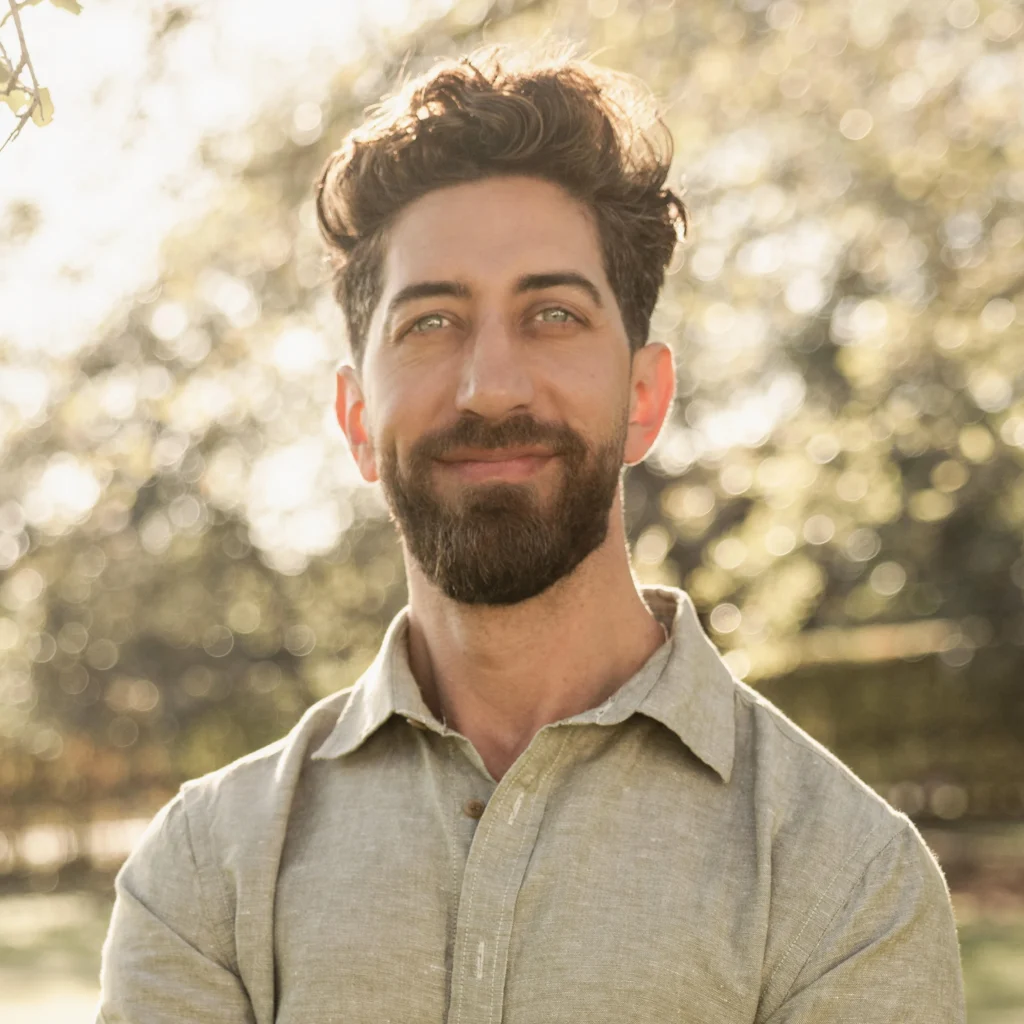
Inside, however, something was quietly unravelling.
“There are pillars in life,” Germán reflects. “Your career, your relationships, your home. When one pillar is shaky, the others can sometimes hold you. But when two begin to crumble at the same time, it becomes overwhelming.”
For Germán, that moment arrived when he stepped into a management role at work just as his personal relationship entered a period of deep emotional turbulence. The pressure of leadership, responsibility and performance collided with the emotional strain of supporting a partner through addiction and trauma. As an engineer, his instinct was to fix problems with logic. But this time, there was no technical solution.
“I realised I was living entirely from my head,” he says. “I had lost touch with my heart, with my intuition, with how my body actually felt.”
The Body Keeps the Score
What followed was not an overnight awakening, but a slow and often uncomfortable turning inward. Germán explored yoga, breathwork, meditation and plant-medicine ceremonies, searching for something that felt both profound and grounded. While some experiences were powerful, others felt unintegrated, emotionally intense but not always trauma-informed or safe for the nervous system.
Eventually, he discovered somatic-based practices that worked directly with the body’s stored tension and emotional memory. These practices, often referred to broadly as Kundalini activation or nervous-system regulation work, focus on allowing the body to release trauma without the need to retell or relive personal stories.
“The body holds experiences we never processed,” Germán explains. “Grief, fear, migration trauma, childhood experiences, they all live in the nervous system. When the body feels safe, it knows how to heal itself.”
The first session didn’t feel miraculous. In fact, Germán left wondering if he had wasted his time and money. But weeks later, something shifted. Old emotions surfaced. Long-buried grief around leaving Argentina and losing his grandparents came into awareness. Patterns of hyper-focus and emotional disconnection softened. Over time, the changes became undeniable.
“I didn’t even know what I needed to heal,” he says. “But session after session, things started to release. I remembered how to feel again. How to play. How to be present rather than constantly chasing outcomes.”
Healing Without Retelling the Story
In 2017, Germán committed fully to this inner path, completing over 300 hours of mindfulness and somatic training. He became a Reiki facilitator, certified life coach and holistic healer, integrating somatic psychology, breathwork, body awareness and trauma-informed nervous system regulation into his work.
In his early training, Germán explored established energetic transmission models that introduced him to the depth of somatic awakening work. As his understanding deepened, he recognized the necessity of integrating trauma-informed principles, ethical facilitation standards and nervous system science into the practice.
Over years of continued study, mentorship, interdisciplinary training and personal devotion, he refined his approach into what is now known as The Inner Method, a trauma-informed and ethically grounded framework that integrates nervous system regulation, breathwork, somatic awareness and energetic transmission within a container of consent, safety and sustainable integration.
What sets Germán’s work apart is that participants are not required to verbally recount their trauma. For many, this is profoundly liberating.
“Some people have been in therapy for years,” he explains. “They understand their story intellectually, but their body is still holding the trauma. This work allows release without reliving. The healing happens somatically, not cognitively.”
Participants attend sessions for many reasons. Some come seeking emotional release or nervous-system regulation after burnout, grief or long-term stress. Others arrive feeling creatively blocked, stuck in their careers or disconnected from their intuition. Many report unexpected benefits: reduced anxiety, improved sleep, emotional clarity, renewed creativity and even physical changes linked to stress reduction.
“When stress leaves the body, everything changes,” Germán says. “People feel safer in themselves. And when the body feels safe, healing happens naturally.”
A Partnership in Healing
Germán’s partner, Stef, brings another dimension to their work. After living for years with chronic pain and relying on prescription medication, she experienced profound relief through somatic healing practices. Today, she no longer depends on painkillers and speaks openly about reclaiming agency over her body.
Together, they create spaces that are deeply nurturing, environments where participants are encouraged to surrender control, listen inwardly and reconnect with their intuitive intelligence. Their retreats and sessions, held across the US and Europe, are designed not as escapes from life, but as gateways back into it.
“This work doesn’t replace doctors or therapy,” Germán emphasises. “It complements them. It reminds the body how to regulate itself.”
The Engineer and the Healer
Perhaps the most surprising aspect of Germán’s story is that he never left the corporate world behind. Today, he continues to work in senior leadership within software engineering while also facilitating retreats and healing sessions around the world.
Rather than seeing these two identities as contradictory, Germán views them as deeply interconnected.
“Software engineering taught me structure, precision and systems thinking,” he says. “Healing taught me presence, intuition and compassion. Together, they make me better at both.”
His leadership style has transformed. Where once he relied purely on logic, he now leads with empathy, intuition and emotional intelligence. Teams respond not just to strategy, but to authenticity. The ripple effects of inner work have reached far beyond the retreat space and into boardrooms and corporate culture.
Creating Safe Spaces for Transformation
At the heart of Germán’s mission is the creation of safety. In a world that prizes productivity over presence and performance over wellbeing, his work invites people to slow down and listen to their bodies.
“Transformation doesn’t come from forcing change,” he reflects. “It comes from creating the conditions where change can happen naturally.”
Whether supporting someone through grief, helping a professional rediscover their creative spark, or guiding participants into deeper self-awareness, Germán’s work is rooted in one simple principle: when the nervous system feels safe, the body remembers how to heal.
For those seeking not just rest, but genuine recalibration — a return to inner alignment rather than another wellness trend — Germán Morán’s work offers a grounded, compassionate pathway back to the wisdom of the body.
DISCOVER: theinnermethod.com
- About the Author
- Latest Posts

In 2006 I embarked on an incredible journey by founding Wellbeing Magazine. This magazine is not just a publication—it’s a purpose-driven platform. It’s been my mission to empower individuals with knowledge about holistic wellness, encouraging them to make mindful choices for themselves and the world around them.