Welcome to Central Park: 5 Secret Places off the Crowded Path
Central Park is so rich in sights that planning a visit to it can feel overwhelming. In addition to all the greenery and animal life
Central Park is so rich in sights that planning a visit to it can feel overwhelming. In addition to all the greenery and animal life, there are iconic landmarks such as Bethesda Terrace and Belvedere Castle. There’s shopping and refreshment in the Victorian Gothic-style Dairy, and educational material in the gabled Dana Discovery Center. These monumental stopping places, though, are usually mobbed with both tourists and native New Yorkers seeking refuge from their busy lives.
In the years that I have been visiting the park, I have learned to take detours from the main paths and away from the major spectacles to spend time with quieter, out-of-the-way attractions and the views they provide. Here are five of my favorite secret places:
Wagner Cove
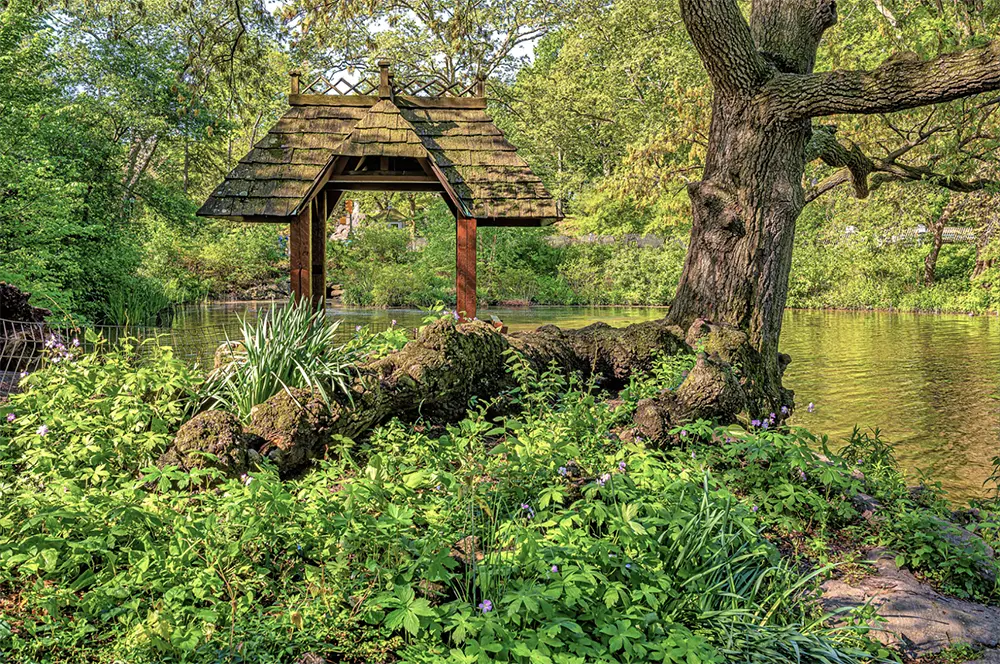
For years now Wagner Cove has been my favorite place to escape the concrete grid of frantic Manhattan and drift away in meditation. Head north-northwest from Terrace Drive along the meandering southern shore of the Lake, and you will end up at a hush-hush little retreat called Wagner Cove. There you will find a little wooden pavilion on a dock that extends over the water, overlooking reeds, algae blooms, turtles and fry. It looks as if it should be the haunt of some Chinese Buddhist master who spends his days in peaceful contemplation of nature.
The thickly grown grove that shelters this little refuge from the world consists of a great variety of trees. You can rub your hand along the seamless bark of a beech tree and walk among the dangling Rapunzel tresses of a willow. There’s also mulberry waving its heart-shaped leaves, and a redbud tree reaching out with zigzag twigs.
The Sculptures of Dawn and Night
Monumental and elaborate Bethesda Terrace is the centerpiece of the park. It spans Terrace Drive, which is usually hectic. Carriage horses and hotdog vendors wait there to serve the many visitors, mostly tourists, who come to look at the Angel of the Waters sculpture and the Lake beyond it. Few take the time to walk just south of the drive and look at a pair of stone piers that feature programmatic sculptures by the British architect (and lyricist) Jacob Wrey Mould.
The pier to the east presents scenes that have to do with dawn. One side of it depicts the radiance of a rising sun. On another panel a rooster, puffed up to crow, stands next to a sleeping cottage with five bound sheaves leaned up against it, an image of work well done. The pier to the west has to do with night. A witch on a broomstick, the queen of the wee hours, flies through the sky, as a bat and owl on another panel look on. On a third panel, there are a bible and a lantern, suggesting talismanic prayers made to ward off pernicious nocturnal powers.
The Summerhouse
Near the eastern edge of the park, just north of the Children’s Zoo, you will find a valley known as the Dene. If you follow the path through it you will reach a massive outcrop. At the top of the stone steps that ascend it is a many-sided wooded structure that rises like a dome. That’s the Summerhouse. Carolina silverbell, white fringetree, red oak and white pine provide an ornamental border that sets it off. The wooden beams that support the slatted roof look like columns for an ancient Greek temple. The slats themselves, along with the vines with which they are woven, filter the sunlight into a haze of dappled shadow on the floor.
The whole quaint structure feels like a refuge, a getaway, especially on a hot summer day. Given its elevation and openness, it offers impressive views. The vista to the north reaches the furthest—way out over the Dene. If you look to the northwest, you can admire what’s known as the Slope, which features native New York flowers and grasses.
Greywacke Arch
Greywacke Arch passes under East Drive, which tends to be busy with bicyclists, e-scooters and rickshaws. The tunnel it provides serves the walking path that connects the groves and grass behind the Metropolitan Museum to the Great Lawn. This span is one of the most distinctive in the park. Its tipped archway belongs to Islamic architecture and evokes something out of Moorish Morocco or Saracenic Spain. Still, it takes its name (“Greywacke”) from the coarse native sandstone of which it is made. For all of its exoticism, it seems to be less made than grown. It fits as comfortably into the scene as the viburnum and white pine trees that grow around it.
It also has its share of bling. Pause for a moment to admire the fleurs-de-lis carved into the ring stones that make up the vault. Then, after passing through the pointed tunnel of shadow, head up to East Drive and check out the cast iron railing that is made up of elaborately wrought three-leaf patterns. Plus, from up there, you can admire the well-mowed oval of the Great Lawn where soccer-players, picnickers and yogis are doing their thing.
The Ladies Pavilion
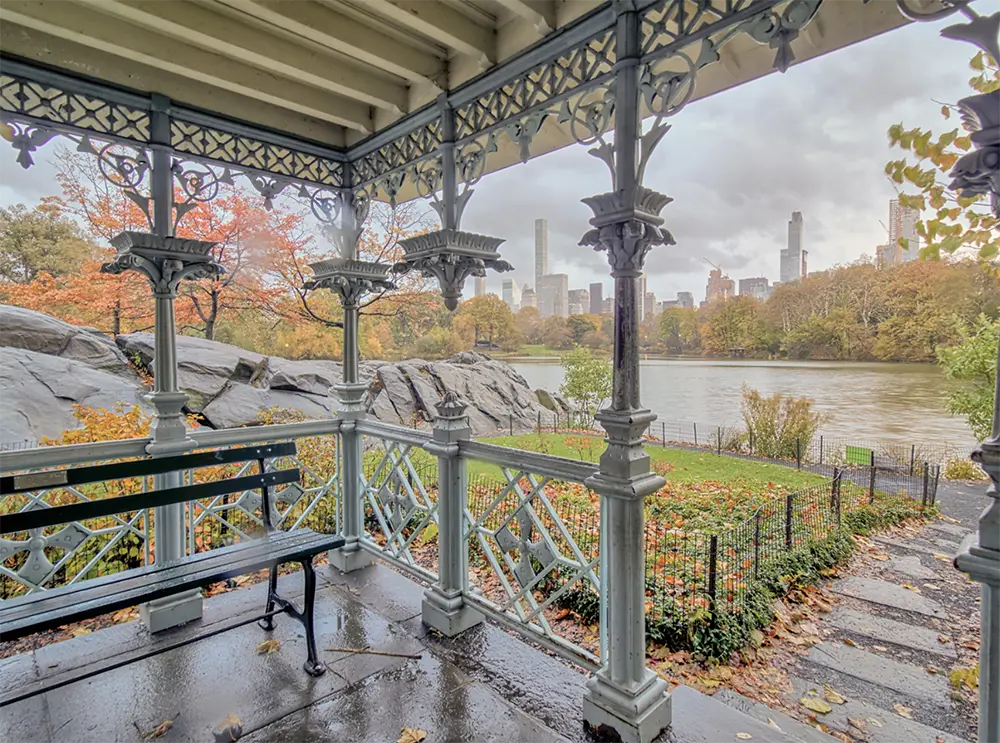
Just off hectic West Drive, the Ladies Pavilion stands on the Hernshead rock outcrop on the western edge of the Lake. An ornately wrought cast iron structure, it suggests flowers and romance. It was originally built to be a place where passengers could shelter themselves from the sun after taking a spin through the park in a horse-drawn carriage. Now, in addition to accommodating pedestrians who want to sit and look at the water, it often serves as a wedding chapel.
I can’t say how many times I’ve stumbled on brides, grooms and wedding parties after strolling up the path that leads to it. A variety of trees as ornate as the metalwork are gathered round to witness the proceedings in the pavilion. There’s shrub-like witch hazel extending branches that are traditionally used as divining wands. Rhododendrons, with their rose-like blooms, make a fitting contribution to the wedding flower arrangements.
Most people come to Central Park in pursuit of peace and quiet, vast as it is. To find them, I recommend purposefully straying from the busy thoroughfares with their stop signs and traffic lights. Out there among the lesser-known attractions, you are more likely to discover the tranquility you are after.
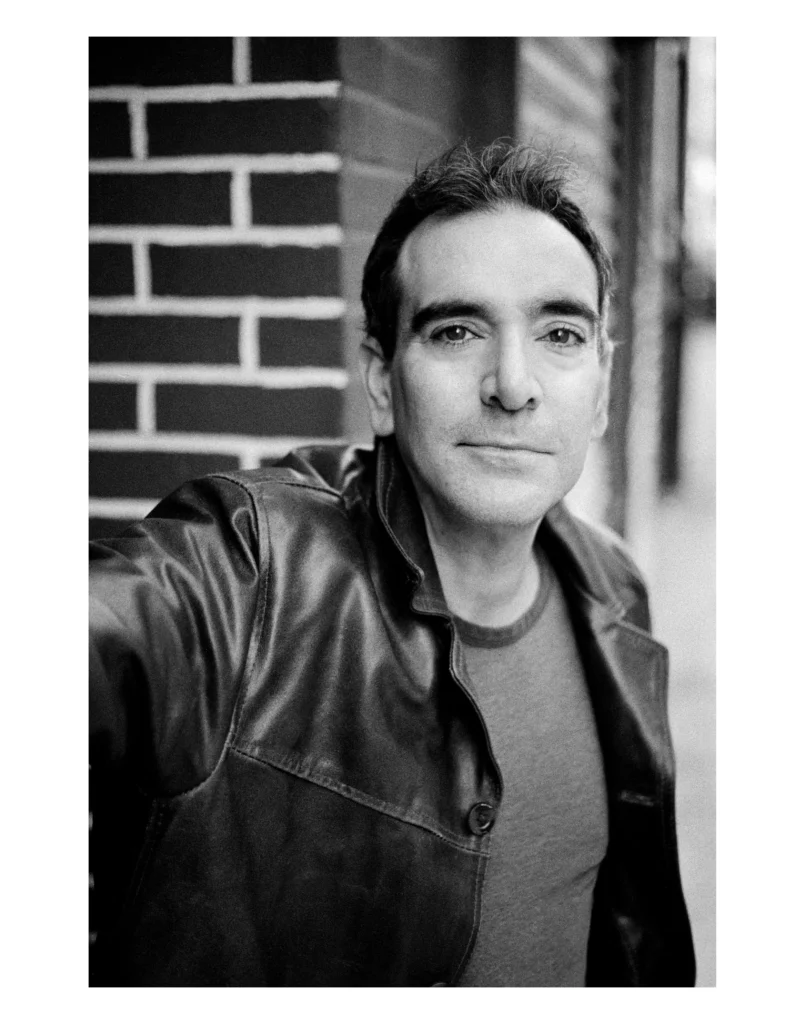
Written By Aaron Poochigian
***
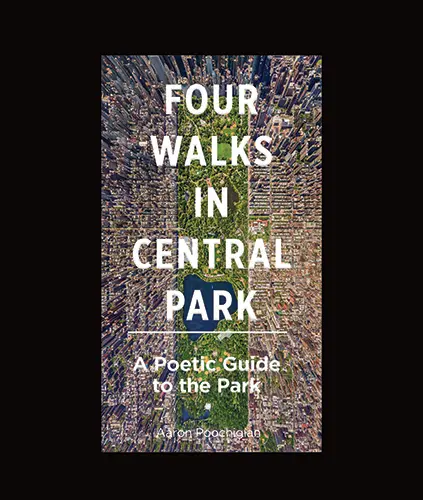
Aaron Poochigian is a poet, classics scholar, and translator who lives and writes in New York City. His translations include Stung with Love (Penguin UK) and Marcus Aurelius’ “Meditations” (forthcoming from W.W. Norton). His work has appeared in such newspapers and journals as The Financial Times, The New York Review of Books, and Poetry Magazine. His new book is Four Walks in Central Park: A Poetic Guide to the Park. Learn more at aaronpoochigian.com.
Filed underMeditation & mindfulness, Spain, Greece, United States, Nature, Sleep, Retreat, Family & parenting