Exploring halotherapy, speleotherapy and my experience at The Real Salt Cave in London
A salt cave is a room designed to recreate the atmosphere of natural salt caves using salt crystals and controlled conditions. People visit salt rooms to relax, practise mindfulness and explore their potential role in supporting wellbeing and overall health.
I have always felt that my immunity could be stronger. During winter, a simple cold often turns into a lingering cough that stays far longer than expected. Then, when summer arrives, hay fever and sinus issues often become another challenge. Looking for ways to support my wellbeing throughout the year, I became curious about salt cave therapy in London.
I spent 90 minutes inside The Real Salt Cave in London to experience this practice for myself and discover what a salt cave session actually feels like.
What Is Salt Cave Therapy?
Halotherapy involves spending time in a salt-rich space. The word halotherapy comes from the Greek word halos, meaning “salt”, and therapy, meaning “treatment”.
Speleotherapy is the practice of spending extended periods in the unique microclimate of natural caves and salt mines.
Modern salt rooms aim to recreate elements of these underground environments using salt crystals, controlled conditions and calming surroundings.
According to The Real Salt Cave, visitors explore salt rooms as part of a wider wellness approach that could support areas such as immunity, respiratory wellbeing and allergies. Their website highlights conditions including bronchitis, tonsillitis, rhinitis, sinusitis, asthma-related symptoms, atopic dermatitis and adenoid-related issues as areas where people may seek salt therapy.
Salt therapy is considered a therapeutic wellness practice. It does not replace medical treatment or professional healthcare advice.
History of Speleotherapy
Modern speleotherapy has strong links to Eastern Europe. One of the best-known speleotherapy clinics opened in 1968 in Solotvino, in Ukraine’s Transcarpathian region.
The clinic operated inside the Solotvinsky salt mine, around 300 metres underground. It could accommodate 250 patients, who received treatments based on methods developed by specialists from the Uzhgorod branch of the Odessa Research Institute of Balneology.
These stable underground environments inspired the development of modern salt caves and salt rooms around the world.
How Does A Salt Cave Session Work?
A typical salt cave session usually involves:
- Sitting back and relaxing alone, or sharing the experience with a friend or family member
- Spending time surrounded by salt crystals in a peaceful setting
- Practising mindful breathing in a calm environment
- Using the space for meditation, mindfulness or breathing exercises
What Was My Experience Inside The Real Salt Cave?
The Real Salt Cave opened three years ago inside Gymbox Marble Arch in London. Owner Vlad welcomed me and shared the story behind the space.
He explained that the salt crystals inside the cave are directly sourced from Ukraine, connecting the experience to the country where modern speleotherapy became widely recognised.
Vlad spoke passionately about the history of salt therapy and how the cave was designed to recreate elements of the atmosphere found in natural salt mines.
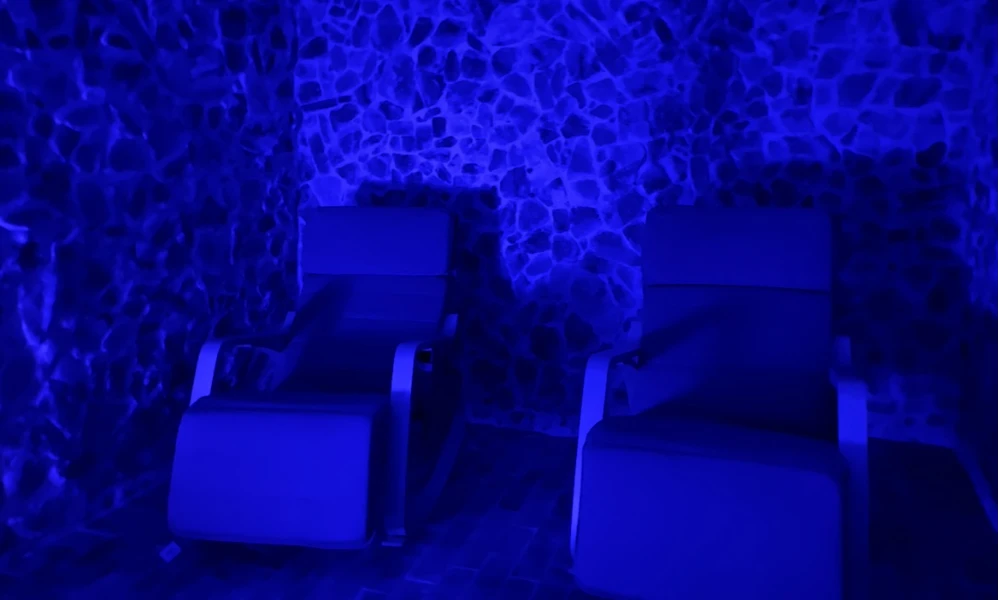
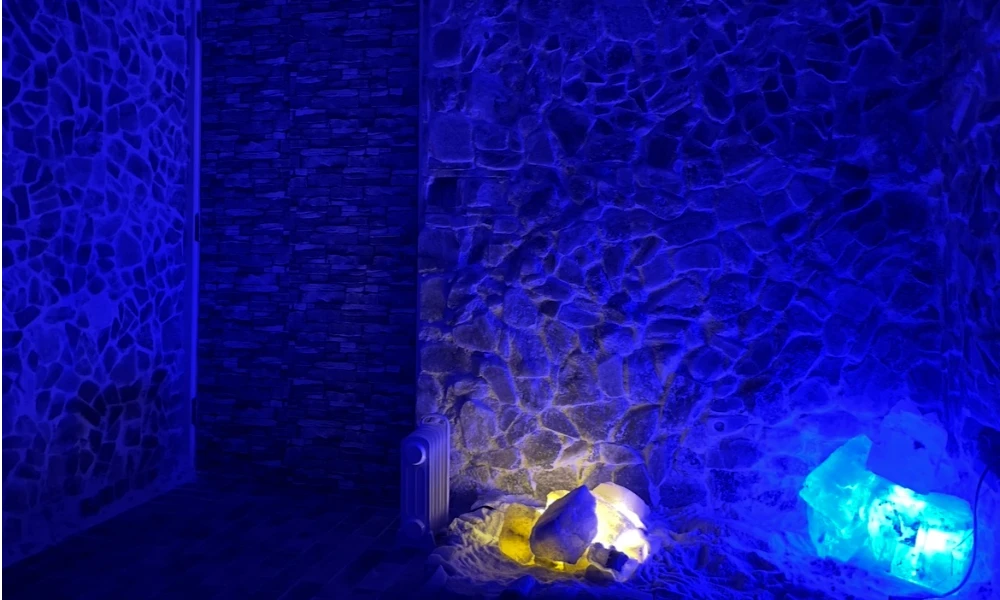
The experience begins with a staircase leading down into the salt chamber. Inside, shimmering salt crystals covered the walls, while salt grains covered the chairs and floor. Soft blue lighting reflected across the crystals, creating a peaceful and almost otherworldly atmosphere.
After admiring the salt-covered walls and ceiling above me, I sat back in the chair, closed my eyes and focused on my breathing.
The peaceful atmosphere made the experience feel deeply meditative.
A machine gently released salt particles into the air, although I could not see them. I spent around one hour and 30 minutes inside the salt cave, relaxing and breathing deeply.
During the session, I noticed my eyes became slightly itchy, which can happen for some people in a dry, mineral-rich environment. By the end of the session, however, they felt noticeably fresher.
I also noticed a positive change in my breathing. Each breath felt deeper and clearer than when I first entered the cave.
Whether this came from the salt environment or simply taking dedicated time to focus on breathing, I left feeling revived and renewed.
How Does The Real Salt Cave Differ From Other Salt Rooms?
The Real Salt Cave draws inspiration from decades of speleotherapy practice in Solotvino, Ukraine. Patients with respiratory conditions spent time in natural underground salt environments.
Vlad explained that the cave’s design is based on knowledge from Ukrainian specialists, including experts connected with Solotvino’s allergological hospital. Their goal was to recreate a similar underground salt cave atmosphere in London.
The chamber uses natural halite salt crystals sourced from Ukraine. They were selected for their high sodium chloride (NaCl) composition. The team says halite helps create a more consistent salt cave environment compared with sylvinite.
Rather than relying solely on active halogenerators, the cave recreates the atmosphere of a traditional salt cave using natural salt materials built into the space.
The team also uses coarse-grained salt, allowing the walls and floors to be regularly wet-cleaned. Salt naturally attracts particles from the surrounding environment. As a result, regular cleaning helps maintain the cave’s condition.
What Salt Cave Sessions Are Available?
When you visit a salt cave, you can choose an experience that suits your needs, from breathing sessions to relaxation.
Vlad offers:
- Breathing exercises
- Massage treatments
- Exercise and workout sessions combined with the salt cave experience
- Quiet relaxation sessions
For my visit, I chose the simplest option: sitting back, closing my eyes and focusing on my breathing.
Are There Potential Benefits of Salt Therapy?
Studies have explored the relationship between salt cave environments and respiratory symptoms. According to research referenced by The Real Salt Cave, laboratory tests reported by the European Respiratory Society explored improvements following speleotherapy sessions. These included changes linked to respiratory symptoms, immune function and endocrine system activity.
Research into salt therapy and speleotherapy continues to explore how salt-rich environments could support respiratory wellbeing and overall health.
Final Thoughts
After 90 minutes inside, I left feeling relaxed and refreshed. The biggest positive difference I noticed was in my breathing.
If you’re looking for a different way to unwind, a salt cave session gives you the opportunity to explore the potential benefits of a salt-rich environment.
A quiet salt-filled room, a slower pace and a moment to pause can create a powerful sense of calm. For me, it was a reminder of how good it feels to become more aware of my breathing.
- About the Author
- Latest Posts