We headed to Lee Valley VeloPark to watch our very own Richard Branson race in the Brompton World Championship — and discovered that the little folding bike we associate with railway platforms and city commutes has a rather more adventurous side.
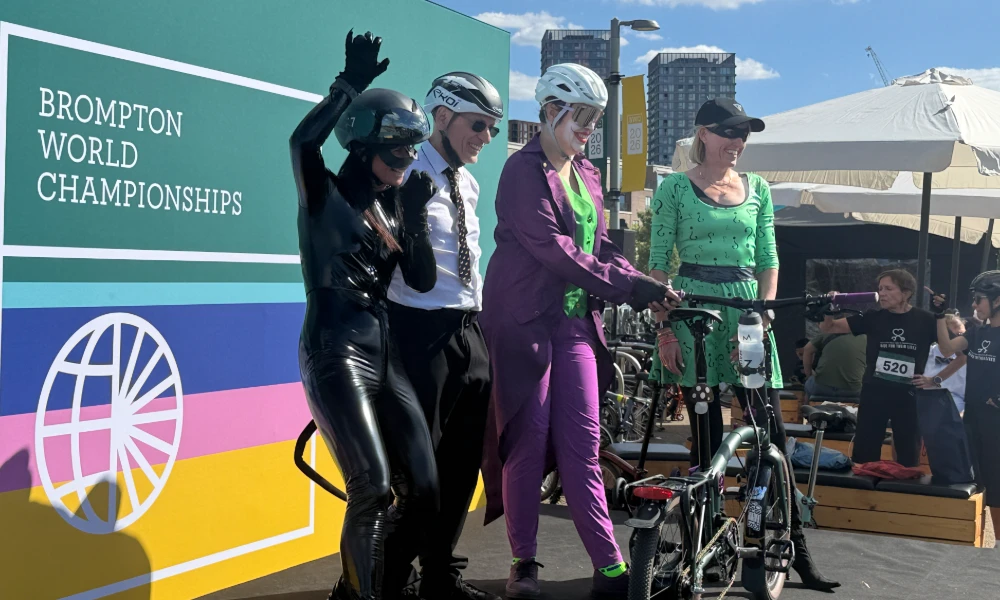
There is something wonderfully British about watching hundreds of grown adults sprint across a track in decidedly un-cycling-like outfits, frantically unfold tiny bicycles and then race them as seriously as their competitive instincts will allow.
This was the Brompton World Championship 2026 at Lee Valley VeloPark, and we had come along to support Wellbeing Magazine’s own Richard Branson as he joined more than 650 riders from around the world for Brompton’s biggest championship yet. Across nine heats, riders tackled five laps in the hope of securing a coveted place in the male and female finals. The start was classic Brompton: bikes folded, riders separated from them and, at the signal, a Le Mans-style dash to reach the bike, unfold it and get moving.
What quickly became apparent was that, despite the word championship, this was as much a celebration of cycling culture as a serious race. Lycra is famously forbidden at the Brompton World Championship, a tradition dating back to the first official championship in Barcelona in 2006, and riders enthusiastically embraced the opportunity to dress with considerably more imagination.
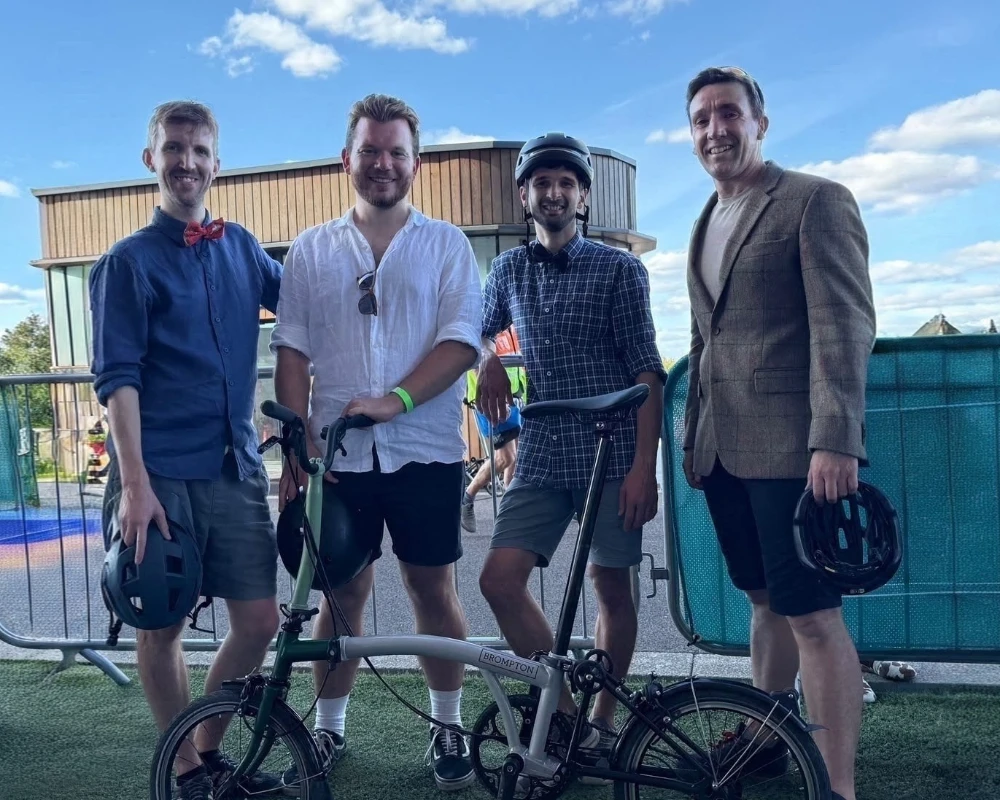
There were folding competitions, demonstrations, test rides, workshops and entertainment alongside the racing, while 2026 also introduced a four-fold relay race. Richard somehow found himself taking part in that too, joining Brompton staff for another dash around the circuit.
Watching it all made me realise that perhaps we have been pigeonholing the Brompton.
More than a commuter bike
The story began in London in 1975 when engineer Andrew Ritchie designed the original Brompton from his flat overlooking the Brompton Oratory. His ingenious three-part folding mechanism could transform a bicycle into a compact, locked package in under 20 seconds. For the next decade he continued refining the idea, initially hand-building bikes to order before production expanded. By 1991 Brompton already had 56 UK outlets and a growing export market.
Half a century later, there are more than a million Brompton owners and over 300 Brompton fan groups around the world. The bikes are still handmade, with steel frames built in London and titanium framesets produced at Brompton’s specialist facility in Sheffield.
Its compactness inevitably made the Brompton synonymous with commuting. Fold it, carry it onto the train, tuck it beneath a desk or restaurant table and unfold it again for the journey home. A current C Line folds to just 58.5 x 56.5 x 27cm, which explains why the design works so brilliantly when cycling needs to be combined with other forms of transport.
But Richard has spent the past decade demonstrating that this little bike is capable of considerably more.
He bought his Brompton in 2016 and, rather than simply using it to negotiate city streets, subsequently rode it from Land’s End to John O’Groats over 12 days, raising money for Hospice in the Weald. It’s a journey that would test any bicycle — and rider — and rather neatly challenges the idea that small wheels and a folding frame belong solely on the morning commute.
The Brompton has also become part of an annual adventure with three friends. Each year they head away for a week, choosing somewhere in the UK or Europe and using their bikes to tour, explore cities and simply see where the road takes them.
That is where the fold suddenly becomes much more interesting. A bike that can accompany you on a train, fit into a car boot and come inside with you opens up a different style of travel. Instead of cycling necessarily being the holiday, the bicycle becomes a tool for exploring once you arrive. Brompton itself describes its fold as suitable for everything from rush-hour trains to around-the-world tours.
For keen cyclists who already own road, gravel or mountain bikes, perhaps that makes a Brompton less an alternative and more another possibility in the collection.
Going lighter
At Lee Valley, Richard also had the opportunity to ride Brompton’s T Line, the company’s ultralight titanium interpretation of its famous folding design.
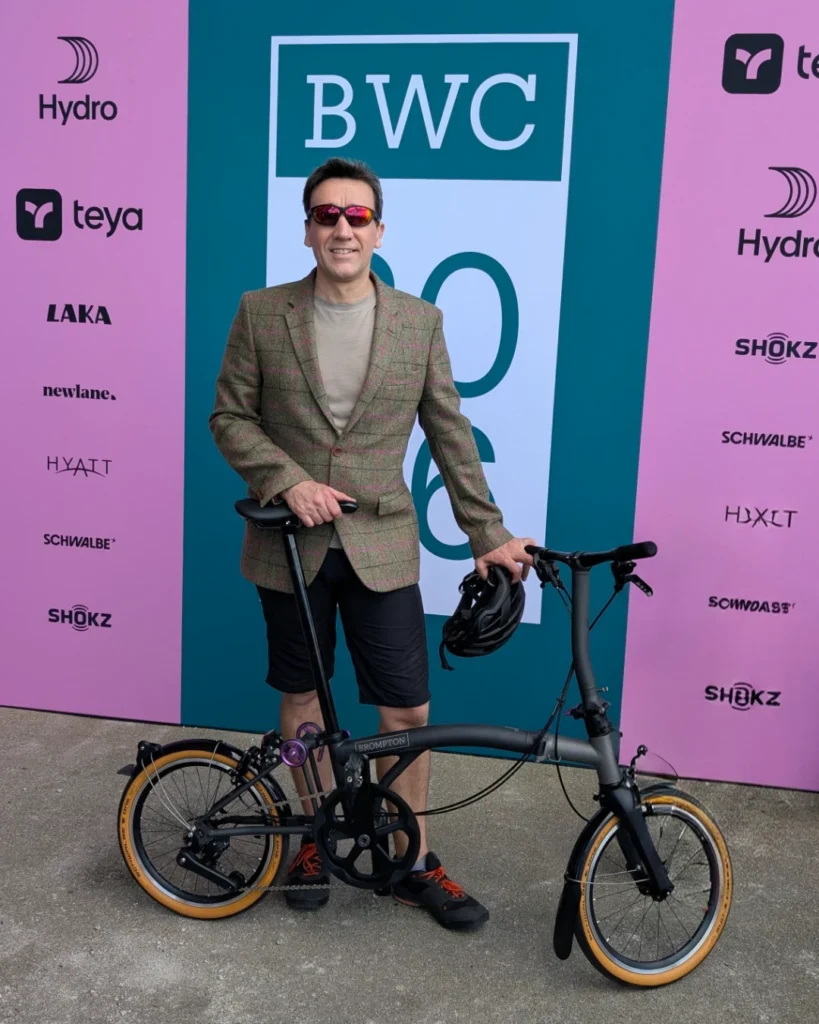
Titanium has been part of the Brompton story for some time — its Superlight model arrived in 2005 — but the T Line represented a much more extensive rethink when it launched in 2022. Titanium frames are handmade in Sheffield before the bikes are assembled at Brompton’s London factory, with carbon components helping to reduce weight while retaining the familiar compact fold.
For anyone who regularly has to lift a folded bicycle onto trains, up stairs or into a car, reducing weight isn’t simply about performance; it changes how practical the bike feels when you’re not riding it.
Electric models extend the concept again. They retain the portability that makes a folding bicycle useful while adding assistance for longer journeys, hills or riders who want to arrive without feeling that the journey itself has been a workout. It broadens the idea of who cycling can work for — and what an everyday bicycle might actually be expected to do.
Putting the fun back into cycling
Perhaps that was the real appeal of our day at Lee Valley.
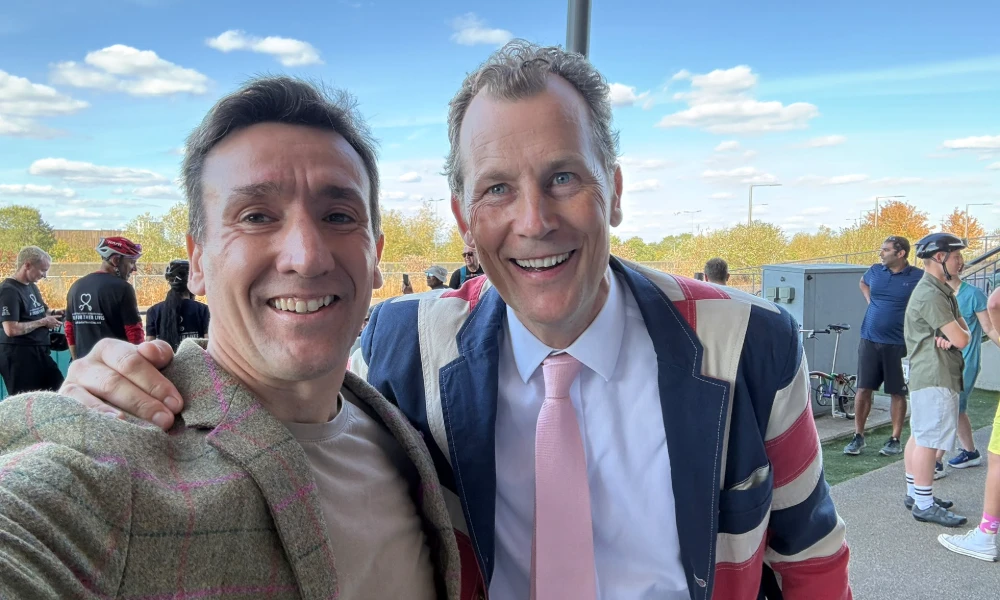
Cycling can sometimes feel divided into tribes: road cyclists chasing watts and personal bests, mountain bikers looking for trails, commuters trying to beat the traffic and leisure riders heading out at weekends. At the Brompton World Championship, those distinctions seemed to disappear.
People had travelled from Europe, Asia, North America and beyond, some intent on reaching the final and others apparently more concerned with their outfit than their lap time. Families and spectators could watch for free, while the new relay format encouraged people to race together rather than simply compete against one another.
It was competitive, but it didn’t take itself too seriously.
We talk frequently about encouraging people to become more active, but movement doesn’t always need to be framed around training plans, performance metrics or exercise targets. Sometimes the best route to being active is simply finding something you genuinely enjoy doing.
Richard didn’t make the final this year. He did, however, leave promising that perhaps he might actually train for it next time.
After watching him race, seeing the extraordinary community surrounding these little bikes and discovering just how far beyond the commuter journey people are taking them, I finally understand why he has been so passionate about his Brompton for the past ten years.
Small enough to fold beneath a table, capable of travelling from Land’s End to John O’Groats, useful for exploring a European city and, apparently, perfectly happy being raced around an Olympic cycling circuit.
Perhaps the Brompton isn’t really a commuter bike after all. It’s an adventure bike that happens to fold.
DISCOVER: brompton.com
- About the Author
- Latest Posts

Rachel Branson is the Founder of Haywood Media and Editor-in-Chief of Wellbeing Magazine, where she has spent more than twenty years exploring the relationship between health, wellbeing and the environments in which we live. Her passion for housing began growing up in her family’s estate agency, where her grandfather, father and uncles worked as a Chartered Surveyor specialising in commercial, residential property and new homes. She later became Head of Communications for a social housing provider, working closely with communities and new developments. Bringing together experience across property, housing, communications and wellbeing, Rachel is developing a new body of work focused on how homes and neighbourhoods can be designed to support healthier, happier lives through every stage of life.