
Did the BBC Get the Science Wrong on Covid Vaccine Safety? Debate Grows Around Media, Risk and Transparency
Questions about Covid vaccine safety, media reporting, and access to clinical trial data have resurfaced following criticism from a leading scientist who…
Questions about Covid vaccine safety, media reporting, and access to clinical trial data have resurfaced following criticism from a leading scientist who says the BBC misrepresented his research.
Dr. Joseph Fraiman, an emergency physician and clinical trial researcher, has publicly challenged the BBC’s interpretation of a peer-reviewed study he co-authored examining serious adverse events in the original Pfizer and Moderna Covid-19 vaccine trials.
His criticism follows an episode of BBC Radio 4’s Everything Is Fake and Nobody Cares, hosted by Jamie Bartlett, which explored why some public figures—including cardiologist Aseem Malhotra—continue to raise questions about vaccine-related harms.
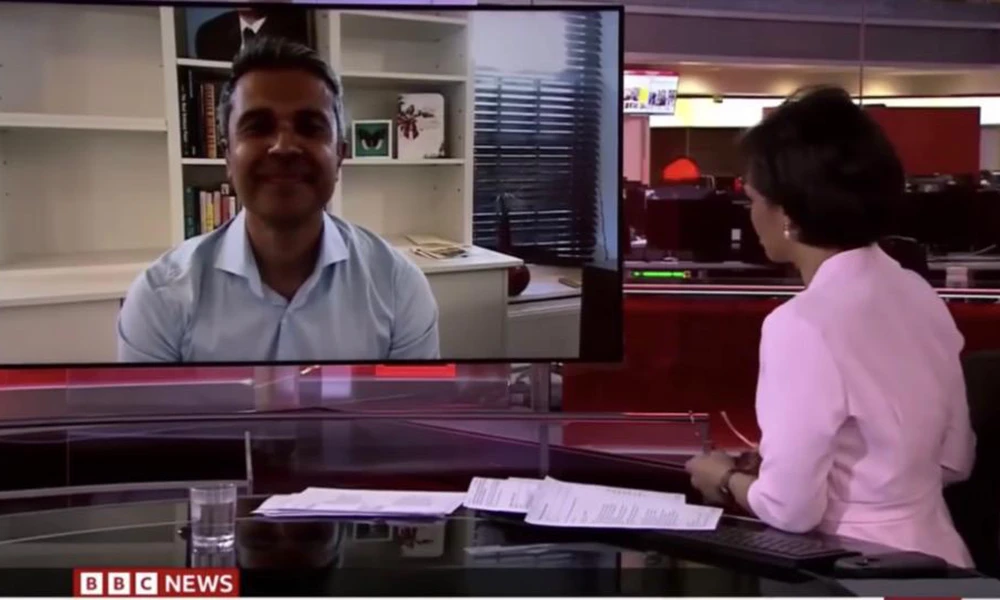
At the centre of the debate is a broader question that remains relevant years after the pandemic: How should scientific uncertainty, vaccine safety signals, and public risk be communicated?
What Is the Study at the Centre of the Debate?
In 2022, Dr. Fraiman was lead author of a study published in the journal Vaccine that re-analysed data from the original Pfizer and Moderna randomised controlled trials. The paper reported a higher rate of serious adverse events in the vaccinated group compared with placebo recipients, a finding the authors argued warranted further investigation.
According to Dr. Fraiman, the study did not conclude vaccines were broadly unsafe, but rather identified what scientists call a safety signal—a pattern that may justify closer scrutiny.
The research has since become part of ongoing discussions around risk-benefit analysis, informed consent, and transparency in pharmaceutical data.
Why Is Dr. Fraiman Criticising the BBC?
Writing for the Brownstone Institute, Dr. Fraiman argues the BBC mischaracterised both his paper and how it was used in public debate.
He disputes comments made during the broadcast by Vicky Male, who suggested the study authors had been explicitly instructed not to use the paper to support claims such as those made by Dr. Malhotra.
Fraiman says this is incorrect.
According to him, no such instruction exists in the paper, nor was it part of peer review correspondence.
His criticism centres on three main points:
1. He Says the Study Did Find Excess Serious Adverse Events
Fraiman argues the BBC wrongly implied the study did not show a meaningful excess harm signal.
He maintains the data did indicate more serious adverse events among vaccinated participants than those receiving placebo.
2. He Says Dr. Malhotra’s Interpretation Reflected the Paper
The programme questioned Dr. Malhotra’s claim that a participant in the trials was more likely to suffer serious harm than be hospitalised with Covid during the trial period.
Fraiman argues this interpretation aligns with the paper’s findings.
3. He Says Media Should Have Checked the Source Material
Fraiman’s strongest criticism is that the broadcaster failed to verify the original study before challenging its interpretation.
For him, this raises a larger issue: whether mainstream media are treating inconvenient findings as misinformation rather than engaging them as evidence.
What About Missing Clinical Trial Data?
One of the most significant issues raised by Fraiman concerns access to participant-level trial data.
His study relied on publicly available summaries rather than the raw individual data from vaccine trials.
According to Fraiman, that is not a flaw in the analysis but a limitation created by lack of transparency.
His argument is simple:
Release the participant-level data.
This, he says, would allow independent researchers to test safety questions more fully.
Calls for greater data transparency have been echoed by scientists across multiple disciplines, making this a wider scientific issue—not simply a vaccine debate.
What Is a “Safety Signal”?
A safety signal does not prove a product causes harm.
It means a pattern appears in the data that may justify further investigation.
In pharmacovigilance, this is routine.
A signal may later be confirmed, weakened, or ruled out altogether.
Fraiman argues the presence of a signal should prompt inquiry, not dismissal.
What About Claims Vaccines Saved Millions of Lives?
The BBC programme referenced widely cited estimates that Covid vaccines saved millions of lives.
Fraiman’s response is that these estimates often come from epidemiological modelling, not direct clinical trial data.
His criticism is not necessarily of the models themselves, but of using modelled benefits to dismiss observed trial signals.
This reflects a longstanding scientific tension between:
- Randomised trial evidence
- Real-world observational studies
- Mathematical modelling
Each has strengths—and limits.
Why This Debate Matters Beyond Covid
For many observers, this debate is not only about vaccines.
It is about:
- Scientific transparency
- Media responsibility
- Informed consent
- Public trust in institutions
- How dissenting evidence is handled
When trust in health institutions has already been strained, how disagreement is communicated may matter almost as much as the data itself.
Can Both Things Be True?
An important nuance often missing in polarised debates is that both of these statements may coexist:
- Covid vaccines may have reduced severe disease and saved lives.
- Some vaccines may also have carried risks requiring deeper scrutiny.
Science often advances through holding competing possibilities in view long enough to investigate them.
That is not misinformation.
That is inquiry.
FAQs About the Debate
Did a study find higher serious adverse events in Covid vaccine trial participants?
Yes. A 2022 study published in Vaccine reported more serious adverse events in vaccinated participants than placebo recipients and called for further investigation.
Did the BBC misrepresent the study?
Dr. Joseph Fraiman argues it did. The BBC has not accepted that characterisation, making this an ongoing scientific and media dispute.
What is participant-level clinical trial data?
It is the raw anonymised data showing what happened to each individual participant in a trial. Researchers often consider access to this essential for independent verification.
Does a safety signal prove vaccines are unsafe?
No. A safety signal indicates a pattern worth investigating. It is not proof of causation on its own.
Why is transparency important?
Transparency allows independent scientists to verify findings, challenge assumptions, and strengthen public trust.
A Bigger Question for Public Health
Perhaps the real issue is not whether one scientist or one broadcaster got everything right.
It is whether modern institutions can still make room for difficult questions.
Can public health tolerate scrutiny?
Can media report scientific disagreement without collapsing into polarisation?
And can the public be trusted to weigh evidence for themselves?
These may be the questions that outlast Covid.
Filed underSpa

About the author
Rachel BransonFounder & Editor in Chief
With over 30 years in publishing and a background in Naturopathic Medicine, she has made it her mission to challenge mainstream health narratives and empower people to take control of their wellbeing. Now expanding her vision across the Atlantic, Rachel is bridging UK and US audiences with inspiring stories, trusted insights, and pioneering partnerships that align with a new era of health innovation.