How DJ N1NJA transformed dyspraxia, identity, and adversity into a life of music, motorsport, and mindful creativity.
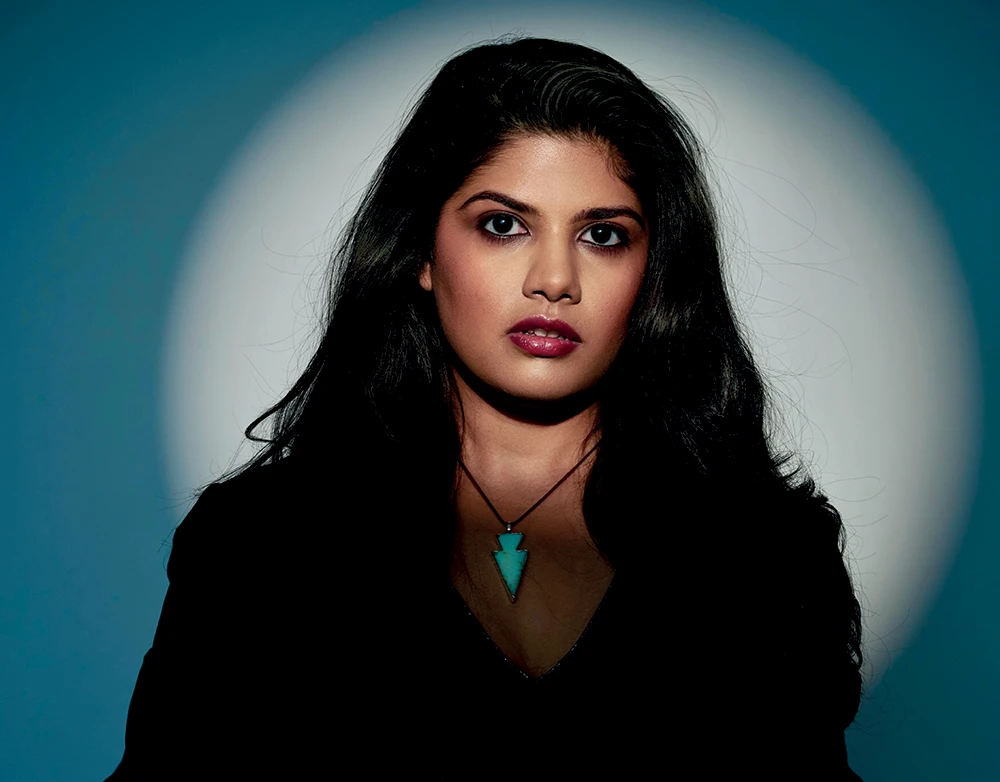
When music is your yin and racing is your yang, it’s no surprise that London-born artist Farah Nanji — known globally by her moniker N1NJA — has spent over a decade igniting dancefloors, stretching imaginations, and blending ancient wisdom with modern sound. Today she stands as a renowned DJ, motorsport entrepreneur, TEDx speaker and educator — but her journey began in a place far more complex and far more human: a school environment where she struggled to fit in, long before she realised she had dyspraxia.
What makes Farah remarkable is not the challenge itself, but the way she transmuted it. Her story is a reminder that the traits we fear might limit us can become the very forces that set us free.
For most of her life, Farah – better known in the music world as electronic artist and DJ, N1NJA – didn’t have a name for why school felt so punishing. She just knew it didn’t fit. Educated at one of the UK’s top schools, she remembers an atmosphere of relentless academic pressure, where grades became identity and success was measured in exam scores alone.
“People were obsessed with grades,” she reflects. “That was the be-all and end-all. I kept thinking, there has to be more to life than this.”
Long before there was a diagnosis, there was a feeling of being treated differently, of not quite moving through the world in the way everyone else seemed to. Dyspraxia – a developmental coordination disorder that affects movement, planning and sometimes even muscle tone – would give that experience a frame much later. In the meantime, Farah went looking for places where she could belong without having to explain herself.
She found them in music and motorsport.
As a young girl, she picked up a Spanish guitar and discovered a door out of the harshness of the school day. “I didn’t want to be a professional Spanish guitarist,” she smiles. “But the guitar gave me an escape. The scales are so emotional and melancholic. It was my first taste of how incredibly healing music can be – whether you’re playing or listening.”
Motorsport provided another kind of sanctuary. Behind the visor of a racing helmet, everything extraneous fell away. “It didn’t matter if you were a girl or a boy,” she says. “Once you’re on the track you’re competing with others, of course, but ultimately you’re competing with yourself – to take more risks at every turn, to get better with every lap.”
Years later, discovering that Ayrton Senna, one of the greatest Formula 1 drivers in history, had also struggled with motor coordination as a child, became a quiet revelation. It suggested that limits of coordination did not have to define the limits of possibility.
Farah’s path into music was equally organic. At 11, she discovered the Buddha Bar compilations and found a soundscape that mirrored her inner world: otherworldly instruments merged with electronic textures, steeped in atmosphere and emotion. By her mid-teens she’d become a regular at fabric in London, years before she was old enough to be there in any conventional sense.
Those early trips were more like pilgrimages than nights out. She became friends with older DJs who recognised the depth of her musical taste and her growing vinyl collection. Very protective of their “little sister”, they invited her into the booth long before she was ready to play, letting her observe them for hours as they shaped the energy of the room.
“There’s no manual for reading a crowd,” she says. “You learn through watching, listening, and feeling. For three years, I just stood there and studied what they were doing.”
In the club, she felt something she rarely experienced at school: true acceptance. No one cared what she looked like or where she came from; the only currency that mattered was the music. For a teenager who felt out of step in the classroom, the dancefloor became a place where her differences were not only accepted, but valued.
There was never a single lightning-bolt moment when she decided she would become a DJ. “It wasn’t like I woke up one day and thought: that’s it, that’s my destiny,” she says. “It unfolded very organically.” She went to business school expecting to follow a more traditional path, but alongside her studies she kept collecting records, playing small gigs, and saying yes to opportunities that felt aligned.
After university, a chance to train as a music journalist with the Ibiza Paper opened up another dimension of her career. Writing gave her a platform to explore the underground scene, interview artists she admired, and gently challenge some of the misconceptions and behaviours she saw within the industry. Over time she grew into a multi-hyphenate role: DJ, music journalist, podcaster, curator and, later, lecturer at Point Blank London.
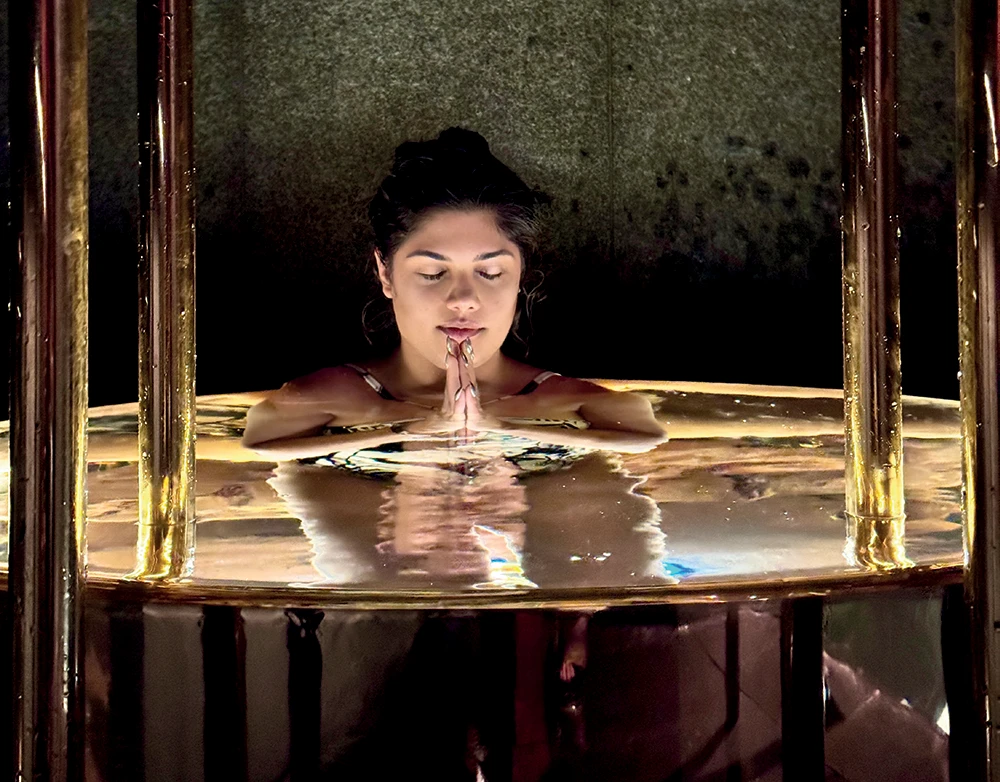
Today, Farah is recognised globally as N1NJA, an artist whose sets weave together her Indian and African roots, electric guitar riffs, sitar lines and deep, driving electronic rhythms. She has played everywhere from Pacha Ibiza to the Steelyard in London and hosted her own podcast, Mission Makers, where she explores the mindset of game-changers across music, motorsport and business. Yet the thread running through it all is wellness: the tools that keep her grounded, resourced, and connected to purpose.
Those tools became non-negotiable as the stakes rose. As her audiences grew, so did the pressure. “When you’re playing a big club in Ibiza and you’re still emerging, there’s a lot riding on that one performance,” she explains. “Eighty percent of the crowd haven’t come to see you; they’re there for the headliner after you. You have to earn their trust quickly. And as a woman, there’s often a layer of judgement before you’ve even played your first track.”
Performance anxiety became an unavoidable companion – but rather than dull it with the substances the industry can all too easily provide, she turned deeper towards breathwork, meditation and movement practices such as Qigong and yoga. She noticed that when she began her day with these rituals, the experience on stage felt entirely different. Without them, everything felt jagged, fragile, more precarious.
That relationship between sound and nervous system is at the heart of her latest project: a new label, Tales of Twilight, and its debut single, Alpine Air. Alongside the original club mix, Farah has crafted a breathwork remix – a complete guided journey set to music, narrated in her calm, radio-ready voice and produced in Dolby Atmos for full, immersive impact.

The breathwork version of Alpine Air is symbolically tied to the track’s catalogue number, 001: the first breath, the beginning of life. She designed it around the yogic concept of a one-minute breath – inhaling for 20 seconds, holding for 20, and exhaling for 20. The track itself is half the tempo of the original, with additional chords and sound design that invite the listener into deep stillness.
“It’s a challenging pattern,” she acknowledges. “You don’t have to be perfect – you can sip the breath if you need to – but when you do reach that rhythm, it feels incredible. It’s a complete reset for the lungs, the breath and the mind.”
The numerology is no accident. Farah has been fascinated by numbers for years, and plans to build each future release around a different breathwork concept linked to its catalogue number, creating a kind of sonic library of meditative journeys. The result is a piece of music that lives comfortably in a yoga studio, a wellness retreat or a quiet bedroom as much as it does in a late-night set.
It also reflects a broader cultural shift in how we experience dance music. Around the world, “conscious clubbing” is on the rise: ecstatic dance, sober raves, daytime parties and club nights that open with intention-setting circles or breathwork. In Ibiza, Farah plays venues where matcha replaces tequila and mornings begin with guided journeys rather than hangovers. “People still want ritual, community, transcendence,” she says. “They’re just more mindful about how they get there.”
For Farah, this convergence of wellness and nightlife feels like a natural evolution rather than a trend. Her own life has long moved between the introspective and the high-octane: Qi Gong and skiing, TED talks and Techno, racing drivers and meditation teachers. Her parents, deeply spiritual and rooted in Indian culture, encouraged her to explore the deeper questions of the mind while trusting her to pursue an unconventional path, so long as she did so respectfully and remained grounded in family.
That grounding has been vital in learning to live with dyspraxia, particularly once she stopped dismissing it. “For a long time, I almost had imposter syndrome around it,” she admits. “I worried people would think I was a fraud: how can you be a DJ and into motorsport if you have a coordination disorder?” Over time, research and self-inquiry helped her understand that dyspraxia can manifest in many ways – from motor coordination and catching a ball to muscle tension and chronic hypervigilance.
Understanding that, she says, changed everything. It allowed her to meet herself with more compassion, to prioritise practices that support her body, and to design a life that works with her neurology rather than against it.
So what would she say to someone who has just been diagnosed with dyspraxia – perhaps reading this and wondering what their own future might look like?
“First, don’t see it as a sentence,” she says. “Get curious. If you understand how it shows up for you, a lot of things will suddenly make sense. You can start building systems, routines and practices that support you. And then lean into your passions. For me, music and motorsport saved me. Your passions will reveal your path if you give them space.”
Her own path remains beautifully ambitious. Farah is unapologetically Type A in her own way – a product of her schooling, perhaps, but also of a deep internal drive. Her long-term dream is to step fully into the realm of headline talent, joining the tiny fraction of artists who cross into that “Premier League” of dance music. At the same time, she trusts life enough to stay in flow, embodying the “Samurai spirit” behind her N1NJA alias: high speed, minimal drag, moving forward without becoming tangled in comparison or fear.
“I feel very in flow with my purpose,” she says. “My job is to keep showing up, keep optimising myself, and keep serving the people who resonate with the work. The rest unfolds in its own time.”
Farah’s story is a powerful reminder that what sets us apart can be the very thing that sets us free. Her dyspraxia did not close doors; it pushed her towards spaces where intuition mattered more than conformity. Her anxiety did not end her career; it led her to breathwork, which now shapes her music. Her search for belonging in adolescence has translated into a global community of listeners, dancers and fellow “mission makers”.
Whether you find her behind the decks in Ibiza, in your headphones guiding you through the breathwork version of Alpine Air, or on stage speaking about the mind’s capacity to rewire itself, one thing is clear: Farah Nanji is living proof that our challenges are not the end of the story. They are the beginning of the most interesting chapter.
DISCOVER: dj-ninja.com
- About the Author
- Latest Posts

Rachel Branson is the Founder of Haywood Media and Editor-in-Chief of Wellbeing Magazine, where she has spent more than twenty years exploring the relationship between health, wellbeing and the environments in which we live. Her passion for housing began growing up in her family’s estate agency, where her grandfather, father and uncles worked as a Chartered Surveyor specialising in commercial, residential property and new homes. She later became Head of Communications for a social housing provider, working closely with communities and new developments. Bringing together experience across property, housing, communications and wellbeing, Rachel is developing a new body of work focused on how homes and neighbourhoods can be designed to support healthier, happier lives through every stage of life.