
How to Experience Traditional Japan Without Leaving Tokyo
If you want tradition/history packed with modern life, Tokyo is one of the rare places where you can experience both. All you need to know is where to look…
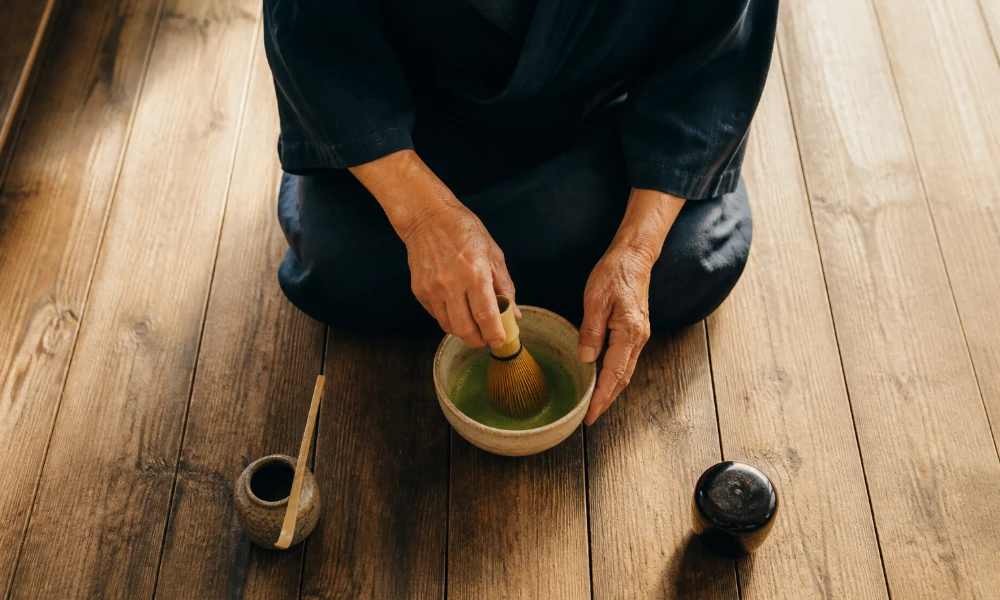
You're in Tokyo, but you'd like to see some old wooden buildings and watch a tea ceremony. It's too bad you need to take a bullet train to Kyoto in order to do that, because you really don't feel like leaving Tokyo.
Well, good news: you don't have to.
You can find that in Tokyo, most likely between a pachinko parlor and a convenience store. And it's been there for centuries, workin' along, not making a fuss. But most tourists don't see any of it because they walk right past.
To be fair, it's understandable why they do that. After all, Tokyo has a reputation for being futuristic, so that kind of makes people blind to all the history it holds.
In this article, though, we'll look at that less-talked-about side of Tokyo.
Look Past the Landmarks
Tokyo is full of famous attractions, and they're all well-known for a reason. You should absolutely take the time to visit them.
But you have to remember that this is only one part of Tokyo, and there's plenty more that's worth seeing. The Skytree in the middle of Shibuya Crossing is something to see for sure, but it doesn't tell you anything about how people actually live here, and it says nothing about the traditions that have survived centuries.
In order to find that, you have to dig a little deeper.
It's not that you have to go out of your way to find some kind of hidden gem that nobody's mentioned before; you just have to change the way you go through Tokyo. Most people have an actual checklist on their phone, and on it, they've listed all the things they want to see.
The problem with that is that it makes you miss everything between those landmarks, and that's a huge waste. Tokyo is very alive, and if you can actually notice that, you'll see all the traditions and the routines without even trying.
Take your mind off performance for a moment and observe.
There's a tiny alley where the facades are all made of wood that's not a tourist attraction. It's just an old street that hasn't been torn down. A few blocks away, you'll find an old man cooking fish over charcoal, and it's just lunch for him. He's not putting on a show for tourists.
Basically, go to a park, sit on a bench, and just watch. Enjoy life for a moment.
You'll see that traditions that feel exotic to you are normal life for the locals. Keep in mind that, in order to truly appreciate and understand any of them, you'll need context.
After all, what's the point in seeing a ritual if you have no idea what's actually going on?
Guided experiences are always a good idea, so look into Tokyo craft and ritual tours while you're there.
Places That Bring Traditional Japan to Life
If you want tradition/history packed with modern life, Tokyo is one of the rare places where you can experience both. All you need to know is where to look to get that experience.
Here we'll give you a couple of ideas to give you an idea of what to do and how to plan your trip.
Walk Through Historic Neighborhoods (Without a Plan)
Traveling without a plan seems counterintuitive, especially when you factor in that you're visiting one of the largest cities on the planet. But if you opt for this path, it's actually to your benefit, and in a BIG way.
If you visit older places (e.g., Yanaka, Kagurazaka), you'll immediately see that these are completely different from what the traditional tourist gets to see. There's no rush, there's no crowd, there's no concrete. The buildings are mostly made of wood. The pace is SLOW. You'll also have a hard time finding a department store there.
There are family-owned shops there, and they'll sell homemade things (e.g., crackers, bread, pickles, kimonos, etc.).You'll see temples there, shrines, and just locals living their local lives.
What you do here is just pick a direction and walk. Don't rush.
Enjoy yourself. What you'll experience here is nothing like what you'll see pretty much anywhere else in the world.
Experience Japanese Food Where Locals Shop
Restaurants you'll find in tourist districts are okay, but places like the outer Tsukiji market or Ameya-Yokocho are much more interesting. They couldn't care less about tourists. This is where the locals buy their food, and you need to give it a try.
The food changes every season, from bamboo shoots in the spring to mushrooms in the fall and citrus and root vegetables in winter.
Watch as the People Practice Traditional Skills
Watching a true artisan's work is something that'll stick with you pretty much forever. And no matter how expensive a souvenir you buy, it won't be able to compete with this type of experience. There are so many workshops all around Tokyo where you can see hundred-year-old traditions and workcraft being used to create pots and paper. Most of these are family businesses where fathers pass down their craft to their sons, through generations.
These aren't relics, though.
It's how artisans earn their living, and when you see them in action, you'll get to see something much of the modern world has lost: patience and precision.
Conclusion
The futuristic, neon, fast side of Tokyo is definitely an experience, and you should appreciate it. But while you're here, why not give traditional Japan a chance? It's all right there, if you know where to look.
Don't make the mistake of treating Tokyo like a theme park.
If you're curious enough, this is a city that will reward you tenfold with its ancient practices and traditions that are still here, right beside the neon lights.


