A Sanctuary Without Dogma: The Living Myth of Broughton Sanctuary
Nine centuries of lineage. Six years of reinvention. At Broughton, Roger and Paris Tempest have transformed a historic Yorkshire estate into a non-dogmatic…
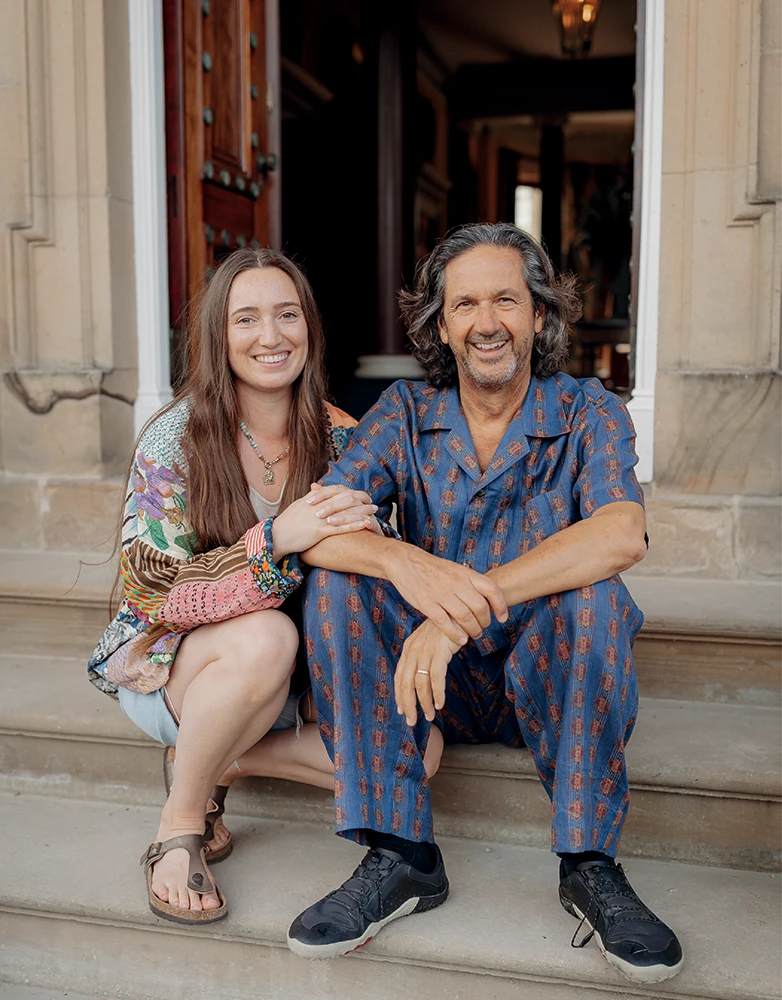
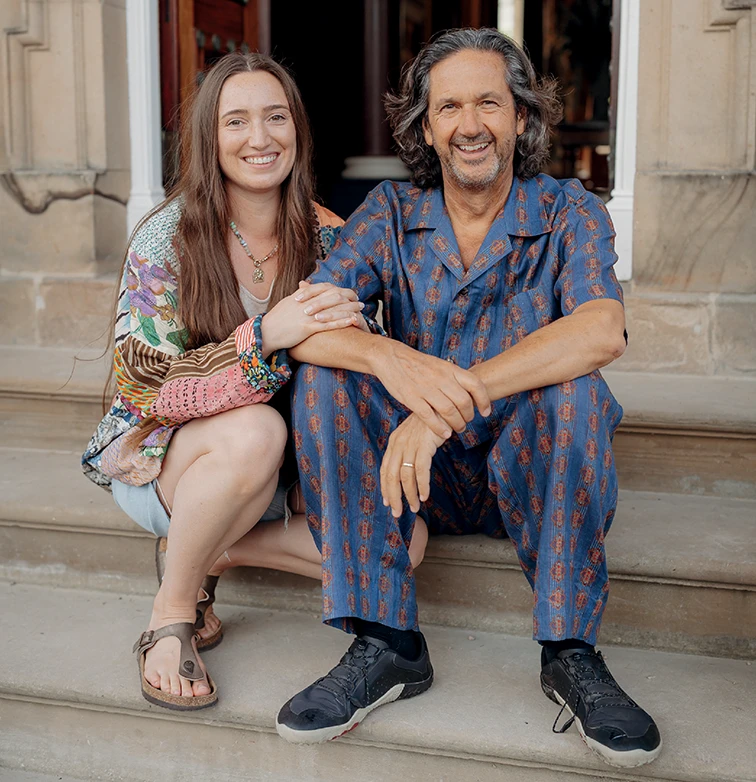
Nine centuries of lineage. Six years of reinvention. At Broughton, Roger and Paris Tempest have transformed a historic Yorkshire estate into a non-dogmatic sanctuary where land, spirit and community meet — a held space for modern healing, and a quiet rebellion against distraction, division and disconnection.
Some stories don’t announce themselves loudly. They arrive as a quiet nudge — a photograph that lingers, a place that keeps calling long after you’ve closed the browser tab.
Something about Broughton Sanctuary did exactly that.
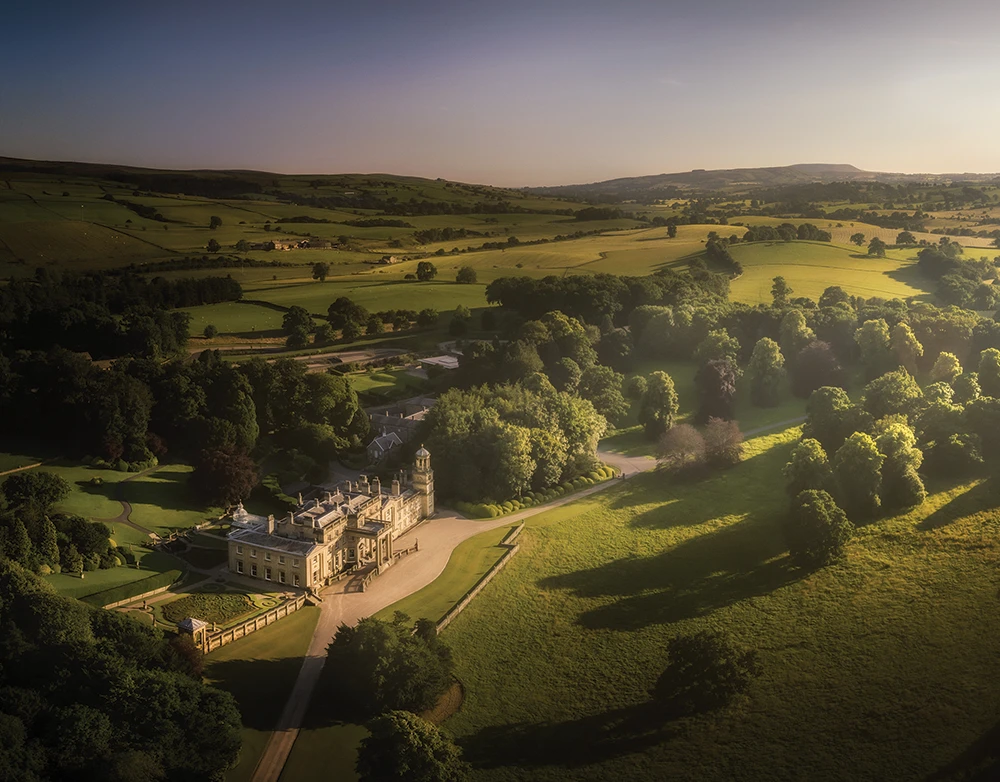
I had first encountered it through our coverage of a retreat held there. The images were arresting: ancient stone softened by moss and morning mist, woodland paths winding towards stillness, people gathered not to escape life, but to meet it more fully. What intrigued me most was not just the setting, but the question beneath it — how does a family home, held by the same lineage for nearly 900 years, evolve into one of the UK’s most quietly radical wellbeing sanctuaries of the 21st century?
Roger Tempest is the 32nd custodian of Broughton Hall, a Yorkshire estate whose history stretches back to the Norman Conquest. Over centuries it has been a medieval stronghold, a recusant Catholic refuge, a family home that survived religious persecution, political upheaval and the slow erosion of time. Today, under Roger and his wife Paris, it has become something else entirely: a living experiment in how land, heritage, spirituality and modern wellbeing might coexist — and even heal one another.
Yet as I explored the website, I sensed there was far more to the story than could be captured online. So I did what felt necessary: I made the journey north to Skipton, arriving the night before our interview, staying at Eden — their understated, beautiful guest accommodation nestled within the estate, often home to retreat guests, residents and seekers of all kinds.
But to understand Broughton Sanctuary, it turns out you have to begin before the interview even starts.
I arrived using the door code I’d been sent, expecting solitude. Instead, there were shoes in the hallway. Signs of cooking in the kitchen. Life. Quiet, communal life. Slightly disoriented, I eventually found my room at the top of the stairs — only then realising I hadn’t planned dinner, had no food, and hadn’t checked the nearest supermarket.
And then, as if on cue, there was a knock at the door.
A head appeared, warm and entirely unphased by my confusion. There was meditation in the chapel, I was told. Would I like to join them? Afterwards, they were celebrating two birthdays over dinner.
I said yes — though I had no idea where the chapel was, who “they” were, or what exactly I had walked into.
I arrived at the chapel and slipped quietly inside. It was silent. Dimly lit. A small group sat in meditation. I joined them, unsure, slightly amused at the surreal turn of events — and yet deeply aware that this was exactly where I was meant to be.
An hour later, the meditation ended. Faces turned towards me as if I were expected. I was gently introduced to John Butler, Broughton’s visiting mystic in residence. Soon after, I found myself being driven through winding country roads to an ancient pub, joining a table of people who — like me — seemed to have been drawn to Broughton not for a night, but for something longer, deeper, harder to name.
I sat between John Butler and Mark Vernon, philosopher-in-residence. Conversation flowed effortlessly — meditation, spirit, land, meaning, nature, belonging. It was one of those evenings that feels both ordinary and extraordinary at once, where time softens and something quietly rearranges itself inside you.
The following morning, I returned to the chapel for early meditation — John can often be found there between 6am and 8am — before walking to Utopia for breakfast, now surrounded by familiar faces and ongoing conversations about wellbeing that felt less like theory and more like lived experience.
By then, I was fully immersed. Not just visiting, but participating. The sense of connection was immediate and uncanny — like coming home to people I had somehow always known. I later learned I was now considered part of the Broughton Residency, an open-ended invitation into dialogue, learning and presence.
And then, as breakfast drew to a close, Roger and Paris arrived for our interview.
So as you settle into this conversation with Roger and Paris Tempest, know this: if you ever find yourself at Broughton Sanctuary, you were meant to be there.
And perhaps, like me, something quietly extraordinary will unfold.
Beyond Right and Wrong: Inside the Living Myth of Broughton Sanctuary
Some places don’t feel “built”. They feel revealed — as if the land has been quietly waiting for the right moment, the right people, the right frequency, to allow the next chapter to unfold.
Broughton Sanctuary is one of those places.
Yes, it is magnificent in the way only a centuries-old estate can be — stone, woodland, rivers, open skies — but the real story isn’t in the architecture. It’s in the atmosphere. In the unspoken sense that this is a held place. A place where things are allowed to happen. A place that makes room for transformation without insisting on an identity, a label, or a doctrine.
When I sat down over breakfast with Roger and Paris Tempest, it wasn’t the polished “wellness pitch” you sometimes find in this world. It was more like being invited into a living ecosystem — part sanctuary, part community, part experiment, part prayer. Their young daughter, unwell that morning, joined us too, and the interview unfolded in that beautifully human way that instantly tells you everything: here, life isn’t curated into perfection. It’s welcomed, as it is.
It was gently chaotic, deeply human — friends, colleagues, children, work and purpose all coexisting in the same space. And through it all, their story unfolded: an unlikely love story, a devotion to land, a reckoning with heritage, and a shared belief that wellness is not something you extract from a place — it is something you cultivate, patiently, together.
“People come and plug in.”
Roger describes Broughton as something akin to a metaphorical power station — a place you can “plug into” for an hour, a day, a retreat… or, as happens more often than you’d expect, something much longer.
It’s not unusual for guests to arrive for a weekend and find themselves drawn into a deeper rhythm: early-morning chapel meditation, slow conversations by the fire, philosophy woven into daily life, nature not as backdrop but as teacher. Some are here for formal programmes — Path of Love, the Hoffman Process, deep therapeutic work. Others come thinking they’re simply escaping the city for a cottage stay and leave feeling as if something inside them has been quietly recalibrated.
What Roger and Paris are creating is deliberately non-dogmatic — spiritual, but not branded. Sacred, but not performative. Their compass is less “wellness trend” and more humanity itself.
Paris returns to a line that has become something of a north star for the sanctuary:
“Beyond ideas of wrongdoing and rightdoing, there is a field. I’ll meet you there.”
It’s a Rumi quote, yes — but here it functions like an architectural principle. Broughton is a place designed to sit above polarisation, beyond the exhausting modern instinct to judge, categorise, and divide. A place where different tribes can coexist without having to convert each other.
A love story — and a spiritual calling
Paris and Roger’s story begins, as so many meaningful ones do, at the end of an old life and the beginning of a new one.
They met twelve years ago, with an age gap that didn’t matter as much as the thing that truly bonded them: the spiritual path. Roger was closing one chapter — recently divorced, on a journey of reinvention. Paris had experienced a spiritual awakening and was searching for deeper truth. Together, they travelled widely, seeking teachers, ashrams, retreats, and places of service — not as tourists, but as pilgrims.
What emerges in their telling isn’t a neatly packaged narrative. It’s something more honest: two people “waking up”, asking bigger questions, and realising that the world’s crises aren’t only political or environmental — they’re crises of meaning, of community, of soul.
Less church. Less shared ritual. More scrolling. More comparison. More distraction. More addiction. More loneliness.
So they began to ask: what is needed now?
Not another “concept” spa. Not another lifestyle escape. Something truer. Something that could hold real people in real life — and gently guide them back to themselves.
A sanctuary built on inheritance — not investment
Part of what makes Broughton feel unusually potent is that its foundation isn’t a trend. It’s lineage.
Roger is the 32nd custodian of Broughton Hall — and with that comes a weight most of us can barely imagine: responsibility not just for a home, but for an unfolding inheritance stretching back centuries. He speaks about the difference between ownership and stewardship — how “value” can become a distraction, while purpose is everything.
There were moments in the estate’s recent history, he says, when things nearly collapsed entirely — particularly in the 1970s when old systems failed, roofs leaked, buildings crumbled, and the future felt uncertain. The sanctuary as it exists today wasn’t born from abundance. It was born from survival, devotion, and long-range thinking.
And crucially, Paris explains, they have chosen to build without external investors — allowing the place to remain energetically clean, values-led, and genuinely independent.
“What comes in goes out again,” Roger says — reinvested into the land, the buildings, the team, the community. A circular economy of care.
Mysticism, made practical
Broughton’s “magic” isn’t only poetic — it’s operational.
There’s a resident mystic (John Butler). A philosopher-in-residence (Mark Vernon). Thought-leaders gathering around fires. Events like Visions for the Future, where communities form and continue long after guests leave. Spontaneous evenings where someone sings in the chapel — not because it’s scheduled, but because it’s asked for in the moment.
And then there’s the land itself.
Paris speaks openly about working intentionally with the estate’s energies — asking permission, honouring the unseen, bringing ancient and modern together. There’s a Bronze Age stone circle. A labyrinth laid with hundreds of stones. Stories of mapping old waterworks, rediscovering energetic lines, even engaging earth-based practitioners to “activate” points on the land — not as theatre, but as relationship.
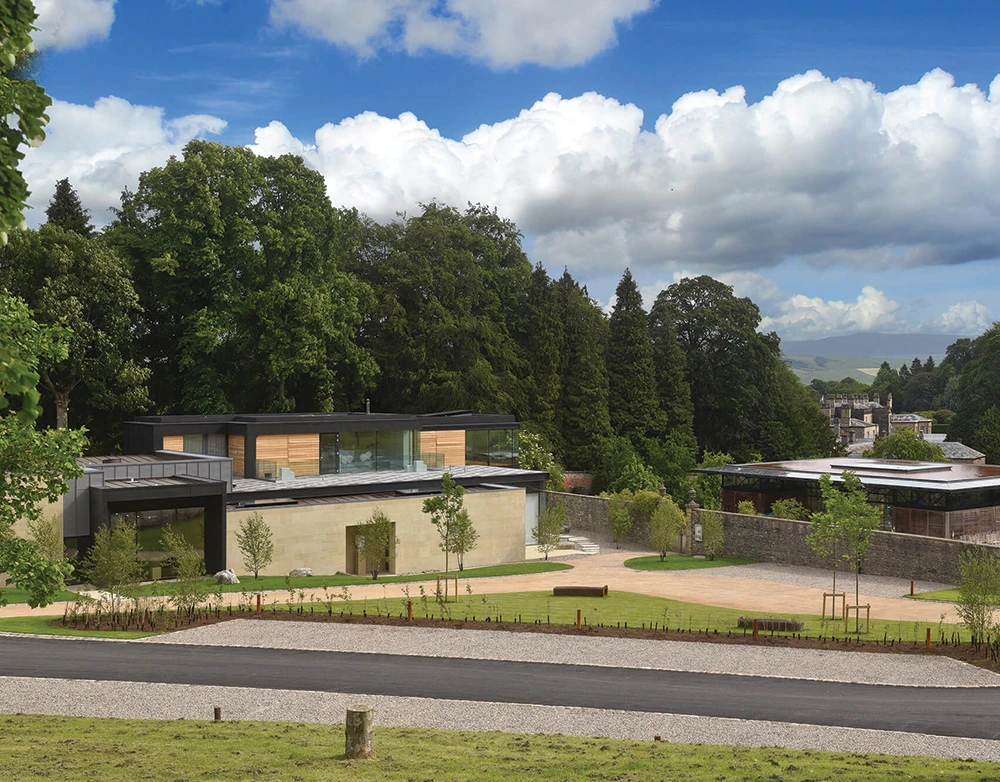
When Avalon — their wellbeing centre — was built, it wasn’t simply designed to look beautiful. It was designed to feel like nature brought indoors: biophilic architecture, reverence for the land, and yes, practices that some might call “woo” until they experience the depth of what they shift.
And yet — what’s striking is how grounded they are. They talk about mysticism and taxes in the same breath. About energy lines and staffing logistics. About spiritual awakening and the daily reality of running a living, breathing enterprise.
This isn’t escapism. It’s integration.
The land is healing, because the land is recovering
The sanctuary’s mysticism isn’t separated from ecology — it’s intertwined.
Roger and Paris describe a major shift away from industrial farming into nature-friendly, regenerative practices: no hormones, no fertilisers, no toxins — a return to common sense, as Roger puts it. They speak of biodiversity returning with astonishing speed: moth and butterfly numbers rising dramatically, rewilding projects taking root, a landscape that now feels alive in a way it didn’t before.
It’s a reminder that healing isn’t a treatment menu — it’s a relationship.
And perhaps that is the real secret of Broughton: the place is powerful because it isn’t pretending to be perfect. It’s doing the work — on every level. Inner and outer. Human and ecological. Practical and mystical.
Broughton doesn’t force transformation. It offers an option. A field. A held space.
“Nothing’s compulsory,” Roger says. “Join… or not.”
And somehow that’s exactly why it works.
Because when people feel safe, when they feel welcomed without being fixed, when they’re allowed to soften — the nervous system settles. The mask drops. The deeper questions rise. The truth comes forward.
And then the real work begins.
So if Broughton Sanctuary feels mystical, it’s not because it sells mysticism. It’s because it has remembered what many places have forgotten:
Healing doesn’t always arrive as a programme.
Sometimes it arrives as a chapel in the dark.
A shared table.
A quiet “yes.”
A field beyond right and wrong.
And if you find yourself there, you may discover what I did:
You weren’t just visiting. You were being called.
Broughton Sanctuary is undeniably beautiful. But its true power lies in something far less visible. Its heart. Its soul. A sense of permission — to slow down, to listen, to belong.
You cannot fully explain it in a brochure. You cannot capture it on a website.
You have to experience it.
DISCOVER: broughtonsanctuary.co.uk
Filed underMeditation & mindfulness, France, Nature, Retreat, Connection
About the author
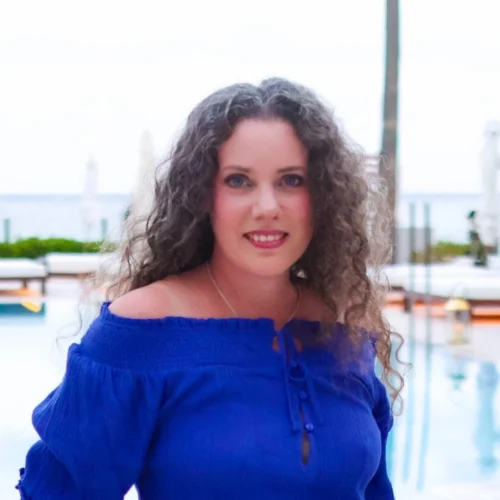
Rachel BransonFounder & Editor in Chief
With over 30 years in publishing and a background in Naturopathic Medicine, she has made it her mission to challenge mainstream health narratives and empower people to take control of their wellbeing. Now expanding her vision across the Atlantic, Rachel is bridging UK and US audiences with inspiring stories, trusted insights, and pioneering partnerships that align with a new era of health innovation.