
The M Word: A Physiotherapist’s Mission to Heal the Silence in Women’s Health
Suzy Shutt of The M Word Physio is changing post-natal care, turning her own difficult birth recovery into a supportive space for women's wellbeing.

For many women, the journey into motherhood is framed by a paradox: while the new baby becomes the centre of a universe of care, the mother’s own physical recovery is often met with a profound and startling silence. Suzy Shutt, a musculoskeletal and women’s health physiotherapist, knows this silence intimately. It’s a silence she first observed professionally in the GP surgeries of South Norfolk, and one she later experienced personally, after the birth of her own child.
It was this gap—between the care a mother gives and the care she receives—that inspired The M Word Physio. What began as a university business project has grown into a specialist practice dedicated to supporting women through the hormonal and physical shifts of motherhood. Suzy’s work is built on a simple, vital principle: women deserve to feel heard, supported and empowered in their own bodies, not just as mothers, but as individuals. “What I really want people to understand about The M Word Physio is how deeply personal it is for me,” Suzy explains. “After having my own children, I realised there was this huge silence around women's health post-birth and our own recovery. We focus so much on the baby, but who supports us?”
A System Under Strain
Suzy’s journey began long before she became a mother herself. Working in a First Contact Physiotherapy role, she sat at the front line of primary care, seeing patients directly within GP practices. Day after day, she met women struggling with symptoms that were quietly eroding their quality of life. “I was aware the waiting lists for pelvic health were significant and symptoms experienced by women were impacting their quality of life whilst waiting to be seen,” she recalls.
She saw how musculoskeletal pain, fatigue and pelvic floor dysfunction were often dismissed, by both patients and some health professionals, as a normal, inevitable consequence of childbirth or ageing. Women were told to accept their symptoms, to endure them. But Suzy, a firm believer in early intervention, saw a different path. “I have always felt that prevention is better than cure,” she says, “so seeing women early would be priority to reduce the risk of symptoms progressing or becoming chronic.” This frustration planted a seed: a growing conviction that a different kind of support was not only possible, but necessary.
The Turning Point: From Physio to Patient
The professional became deeply personal when Suzy had her first child. An emergency C-section—a procedure classified as major abdominal surgery—left her navigating a challenging recovery with strikingly minimal support. “My rehabilitation… was minimal,” she reflects. “Luckily, being a physiotherapist, and trained in pilates, I was able to rehabilitate myself to a level to return to pre natal exercise levels but I am aware this is often not the case for many women.”
The standard six-week postnatal check-up felt jarringly incomplete. “The 6 week review, consisted of being asked about contraceptive methods and my mental health,” she says. “This needs to improve by asking more about the holistic picture including a mothers physical, mental and social health as I firmly believe they all coexist together.” Her experience solidified what she had suspected for years: the system was failing to see the mother in her entirety. The focus remained on the baby, while the woman who had just undergone one of the most profound physical and hormonal shifts of her life was left to figure things out on her own. It was a turning point that transformed her business idea into a mission.
Building a Village
Starting a specialist business comes with its own set of challenges. For Suzy, the biggest hurdle was education. Many women, and even other healthcare professionals, were simply not aware of the role physiotherapy could play in managing hormonal health and postnatal recovery. Building trust in a new specialism required patience, persistence and a willingness to build connections from the ground up.
Then came the personal test of taking maternity leave. For any founder, stepping away from a business that relies on your personal expertise is daunting. “I had worries when taking time off for maternity leave,” she admits. “I had built my business and managed well with word of mouth for new clients. Maternity leave is a big change to lifestyle and finances.” The tension between wanting to be present for her new baby and needing to sustain her business was very real. “I didn't want to take too much time out from my role within my business but I also wanted to enjoy my time with my new baby – the arc of matrescence is a thing!”
This period taught her a vital lesson about community. Rather than seeing other practitioners as competition, she embraced collaboration. “How important networking is and not to be afraid to support others on your journey,” she advises other founders. “Building your own business village is very important, you will all bring different experience/skillsets and when communicating well, recognising others specialisms and supporting referral pathways for better client care – this is the true power of successful networking.” She learned that opportunities arise from connection, and that a supportive network is the foundation of sustainable success.
Care That Sees the Whole Person
At the heart of The M Word Physio is a commitment to personalised, holistic care. Suzy’s approach goes far beyond addressing physical symptoms. She creates treatment plans that honour the complex reality of a woman’s life after childbirth. “When completing a personalised treatment plan I aim to always look at all aspects of lifestyle for that individual,” she explains. The process considers mental and physical health, social life, support networks, finances, nutrition, sleep, relationships, and most importantly, a woman’s own personal goals.
It is a process that requires time—a commodity often lacking in standard healthcare appointments. By creating a calm, unhurried space, Suzy gives women the opportunity to be fully heard. She helps them reconnect with parts of themselves that may have been lost in the transition to motherhood. “What they miss and looking at how they can bring some of their previous goals back into their current programme,” she says. “It takes time, but time is really important.”
The impact of this approach is tangible. Women who felt their symptoms were just “normal” begin to understand their bodies and reclaim their confidence. Partnerships with brands like John Lewis and Sweaty Mama have helped her reach more women, improving access to education and support. Her expertise has also been recognised academically; she now lectures in Musculoskeletal and Women’s Health Physiotherapy at the University of East Anglia and was recently shortlisted as one of the Top 10 UK Female Entrepreneurs in the Small Business Awards UK.
Practising What She Preaches
Leading a business dedicated to wellbeing while raising two children has taught Suzy the non-negotiable importance of her own self-care. She is a powerful advocate for mothers making time for themselves, and she lives by that philosophy. “I practise what I preach! I have 2 children myself and ensure I find some 'me' time,” she says. “Even if this is once a month – I ensure I have some time doing something I enjoy from previous hobbies before children.”
For her, that time often involves art. “Whether its an evening sketching at home or attending a local art group. Having something booked into the diary helps as having something to look forward to, knowing I will have some time.” She also balances her exercise routine, recognising that modern life demands moments of stillness as well as strength. “I am much more mindful now on the importance of slowing down, learning more about meditation/relaxation methods,” she reflects. “In a world where everything is very fast paced and busy, I think we often forget now how to relax so a balance of exercise is important – from strength training to relaxation/breathwork. It's all really important.”
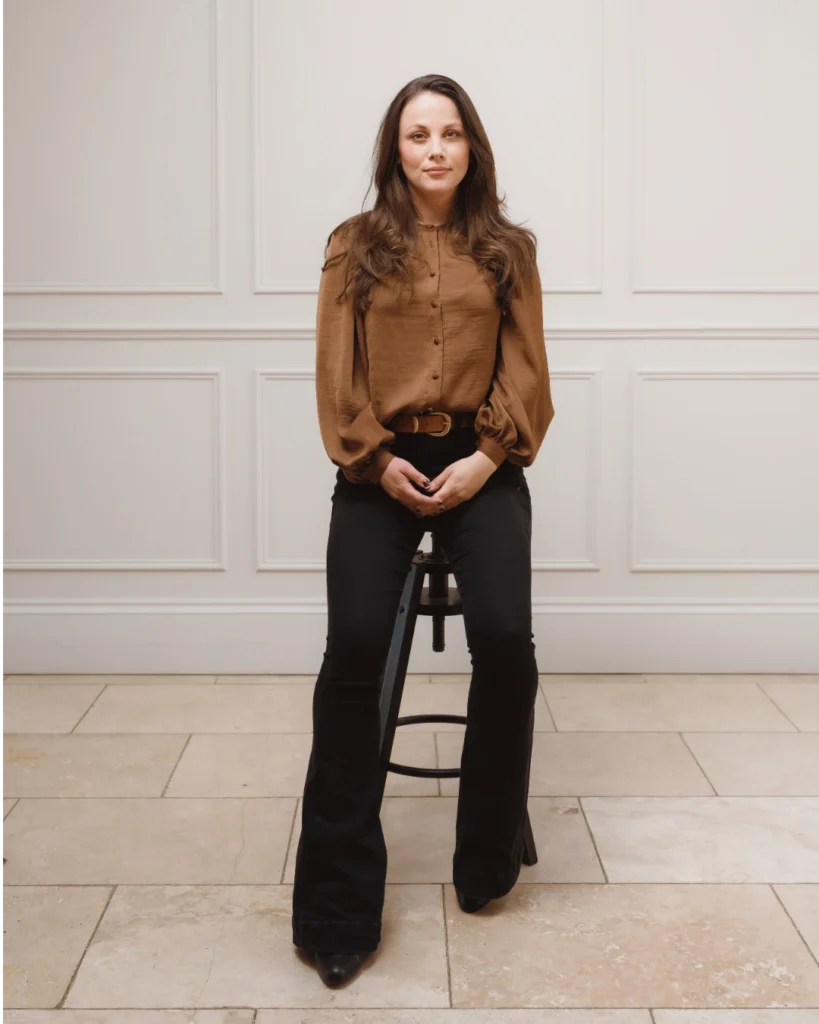
An Authentic Voice for the Future
Looking ahead, Suzy’s vision is to make The M Word Physio a leading voice in postnatal care, helping to break the stigma that still surrounds mothers’ health. She believes the key is authenticity—blending clinical guidelines with the lived reality of parenthood. “Parenthood doesn't always fit a box,” she notes, “so finding methods to manage it around that and being realistic is really important.”
For other founders entering the health space, her advice is rooted in humility and connection. She encourages networking, sticking to your values, and even embracing a healthy dose of self-doubt. “I believe that a level of imposter syndrome is good – it will keep you grounded and make you continue to question your knowledge, practice and experience. Use that uncertainty to drive yourself to learn more and develop further.”
Suzy Shutt’s work is a quiet but powerful rebellion against a culture that too often asks women to disappear into the role of motherhood. Through The M Word Physio, she is not just treating symptoms; she is restoring dignity, building confidence, and reminding women everywhere that their health, their wellbeing, and their stories matter. She is healing the silence, one conversation and one appointment at a time.
Discover: mword-physio.co.uk
Primary keyword: postnatal physiotherapy
Filed underWomen's health & hormones, Physiotherapy, Fitness & movement, Family & parenting

About the author
Rachel BransonFounder & Editor in Chief
With over 30 years in publishing and a background in Naturopathic Medicine, she has made it her mission to challenge mainstream health narratives and empower people to take control of their wellbeing. Now expanding her vision across the Atlantic, Rachel is bridging UK and US audiences with inspiring stories, trusted insights, and pioneering partnerships that align with a new era of health innovation.